Category Archives: Work Life

A Change in Planning

At work I plan in a project management and process style.  This should go before that, these tools are necessary to complete that task, assemble this list of things before starting task x.  It makes so much more sense to plan – who wants to keep stopping and starting a project to get it right?

my PM reading

It would make sense then if I applied the same concepts to my personal life.  Yes, it would.  But that isn’t how it usually happens.  I’m behind on making doctor and dentist appointments, there is a list of little things that need to be fixed in the house, and don’t ask me the last time that I went on a vacation beyond visiting relatives.  All of these activities take some planning and so await that step.


I have actually taken a day off of work to do all this planning so that I will be prepared for the day off that I will need to take to complete the tasks themselves.  I know many of you can relate.  It is just too hard to squeeze the calls and so on that are the planning stage for all of this stuff that begs to be done.  Evenings would be a good time, or maybe weekends.  Sure.  One out of fifteen things on my list are successfully planned during these hours.


It seems to me that I am often rewriting a to-do list onto a new sheet and transferring most of the items over just because the old one got too hard to read in the bottom of my purse or on the front of the fridge.  I wish I could say because so many of the points on the list were crossed off.  Ha.  I have taken to dating the lists, just for self-torture purposes.


I’ve decided that I must use up all of the best planning brain cells at work and leave the lazy ones for personal stuff.  I drive home at the end of a day, or wake up on a Saturday with the best intentions and sometimes manage to actually knock two things off the list on the same day.  Only to have two new ones show up the next day.  (Sigh.)


Can you relate?  If you can’t because you are on top of all the aspects of your life, do share your secrets.


© 2013 BAReed Writing | Practical Business, All rights reserved

Wanted to do This, but That Got in the Way

Have you ever just been eager to start on something but been prevented because something that you need to do what you want requires attention before you can get into your desired task?  So frustrating!


For the last month plus I have been finding more often than not that when I sit down to write – blog post idea percolating away in my head – my Microsoft Word must be reinstalled.  Grrr.  Now I must deal with this technical issue and risk losing the essence of my post idea unless I start to write it out long hand.  My thoughts come faster than I can sketch out this way, that is why I love composing on the computer.


There are plenty of other examples; getting ready to bake something and finding I am short on a key ingredient, wrapping a package and the tape is missing in action, nearing the end of a project but still have an open question due from someone else.  So close, and yet…  Ticking this task off the to-do list will just have to wait.  Darn it.

Pushme-Pullyou from the original Dr Doolittle movie.  (my appreciation has lasted a lifetime)

Pushme-Pullyou from the original Dr Doolittle movie. (my appreciation has lasted a lifetime)


A few years ago I just couldn’t quite motivate myself to get in the car and go off on vacation.  A vacation that included my cousin’s wedding.  I’m not sure what prompted my malaise, but I waited until the morning of departure to pack and then did so in a desultory fashion, all the while fighting with the idea that I just wouldn’t go.  When I finally got myself on the road, it was only perhaps an hour into the drive when I started to think of toiletries and other items that I had forgotten to pack and by the time I stopped for a break I had almost a dozen things listed.


It wasn’t anything that I couldn’t replace at the nearest drug store – the worst was my favorite lipstick and the drug store where I stopped didn’t have an equivalent color.  And it was more my own head that got in the way in this instance and created external obstacles, but I still had to push through it.  I did end up having a lovely time, and a much needed break from work.


Hmm, my frustration with Word is what prompted this post and I’ve taken it somewhere I didn’t intend.  I guess my point then is that it is good to plan, but also to push through the unplanned or frustrating parts.


© 2013 BAReed Writing | Practical Business, All rights reserved

Not an Optimal Time to Think

If we were to be asked, we would say that we should always think about what’s going on, what we are doing because it cuts down on mistakes.  And then there is reality, often a far cry from what is best practice.  Well, to err is human.


Ask a person how something went wrong – a car accident, a work mistake, hurt feelings after a callous comment – and the answer most likely boils down to ‘I didn’t think’.  Too much was going on in that person’s mind at that moment and the most immediate task became the casualty of the overtaxed thinking process.

thinking

This is why we practice things, why we drill something over and over, so that the activity creates a sort of groove in our brain and that memory kicks in every time we take up that activity.  (Think of the times that you have been tired and pulled into your driveway and realized you don’t remember the trip at all.)  All that practice makes it more possible that we’ll do the right thing even if we might be fighting panic or illness or something else entirely.  But it isn’t foolproof.


I have tacked up bits and scraps of paper near my writing desk (which I rarely use now that I have a laptop…), these scraps hold advice on writing from past well-known writers.  One is apropos for today, because it can be applied to thinking as well as writing.  It is Herman Melville who said it, but it comes to us through Sarah Paretsky; a writer must be in a ‘silent grass growing mood’ in order to write.


Think of all the times that you know a thing but it just won’t crystalize in that moment.  Most likely because that moment isn’t an optimal time to think – there is noise, distraction, pressure coming from somewhere and clouding your thought process.


I equate this to my math difficulties.  My brain shuts down on any math when I am in a group.  This goes back to a horrid game that was suddenly introduced to me on a steel gray February morning in 2nd or 3rd grade.  I had just moved to the school, so my classmates had been practicing this game for months.  To this day my brain simply says no if I have to do math when there is any attention on me.


I needed a silent grass growing mood to get a firm grasp on math concepts and then practice to gain speed before I played that stupid game.  Even understanding the root of my math anxiety, it is rarely an optimal time for me to think in mathematical concepts when I’m in public.


© 2013 BAReed Writing | Practical Business, All rights reserved
Do You Know When You’re Done?

I was just plowing through a few household chores, feeling effective because I could see immediate results as things were put in their proper place, wiped down and such.  I felt like I accomplished something – a feeling that is hard to come by in our modern world.  Particularly at work.


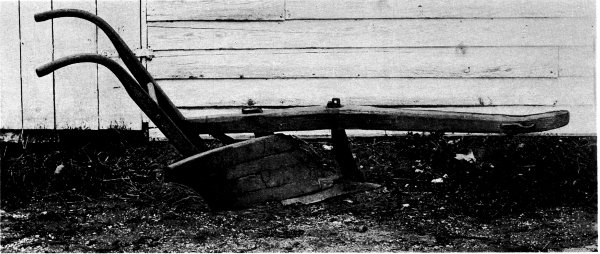
Back when we were mostly an agrarian society, it was easier to see when we were done – animals fed and given clean stalls, garden weeded, wash on the line to dry.  A person could end the day with a sense of accomplishment.  Most of these tasks would still have to be repeated the next day, but a person could rest knowing that the job was done for that day; stability had been maintained.

public domain image

public domain image


Now there might be a quota of orders to fill in a warehouse, or parts to be made on an assembly line or projects to be worked on in an office but done is a bit harder to see and feel.  So what if I made and received a lot of calls plus dealt with many emails, I didn’t get done because there are still more.  That quota in the warehouse or plant might have been met, but there are still more behind them that the workers can see.  The quota is lodged in a computer somewhere.


We need to feel a sense of accomplishment, but we’ve made this nearly impossible to achieve.  That stability that previous generations could build seems nebulous to us.  How do we capture and nurture it again?


I wish I could say that I have an answer that works for me.  Even as I was whipping through the straightening and minor cleaning of my house this morning, there were glaring hints of the larger jobs that have been neglected for one reason or another (time, know-how, money).


One thing that I can say, since I have been aware of this accomplishment deficit, is that I make a point of reviewing what I have completed every day.  Even if it wasn’t something that I intended to do, or is very minor.  By consciously focusing on these checked off, crossed out tasks I can somewhat counteract the weight of all the partially done tasks in front of me.


What about you, do you know when you’re done?


© 2013 BAReed Writing | Practical Business, All rights reserved
Intellectual Calisthenics

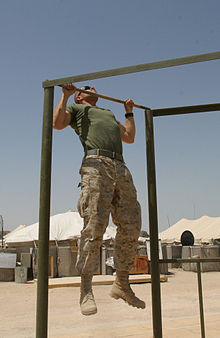
Some weeks just seem to be overfull of mental obstacle courses – over this wall, through that muck, around the barrier, dodge the danger zone, swim this channel, start this next obstacle course.  And again.  Oh my.

photo credit: Wikipedia, Marine Pull ups

photo credit: Wikipedia, Marine Pull ups

The brainy neuroscience folks like to tell us that this is good for our minds, keeps us sharp.  Hmm, I feel more like I have a puddle in my head after a couple of days like this and can’t be trusted to decide what’s for dinner.  I don’t really care in those moments that I might be lowering my risk of dementia.  In fact I tend to feel slightly demented after too many days of intellectual calisthenics.

One good puzzle here and there and I agree, my brain is the better for the exercise.  For instance in the calm quiet as I write this, it has been a good challenge to remember how to spell calisthenics.  (My fingers don’t want to spell it correctly and resent that I keep using the word.)  It’s when there is a relentless string of exercises that things get wearing.  Like I’m in my own extended, real life version of a disaster movie.  How much more can be piled on?

(That last question is rhetorical, I don’t really want to find out.  I thought that I better put that point out there, just in case some force wants to explore the answer.)

Well, the sun is shining and that is a November feat not to be ignored, so perhaps I should take a break from intellectual exercise and go get some of the physical kind.  The leaves need to be raked, so I’ll think about that as I take a walk and soak up some sun rays.

How have you exercised your own mind lately?  And how do you feel about it?

© 2013 BAReed Writing | Practical Business, All rights reserved

Assigning Motives

Sometimes I watch these procedural dramas on TV like Criminal Minds and CSI because I like to see the methodology.  But the creators seem to think that they must show obscenely deviant behavior to make their point and that is wearing.  We have so many of these shows and books that it starts to seem much more common than it really is to have psychopaths running loose.


We do like to know why something happened, why someone did something.  It helps us to know what to do with the experience.  Most of us will never, thankfully, encounter someone who is psychotic but we do have plenty of incidents in our daily interactions and we assign motives to the other participants in these incidents so that we can categorize the why, make some sense, decide how to react or move on.


For instance, we should all be conscious in our interactions with businesses that their motive is profit – sometimes in a manner that is beneficial to us as well as the company and sometimes at our caution.  (I’ll refer you back to my post about my dumb phone, I don’t see the services offered with these smart phones as more beneficial to me than the profit the company gains – or even as equally beneficial.)  Businesses have marketing folks to smooth over their profit motive and make their product or service as attractive as possible to the largest pool of potential customers.  And buyer who forgets the underlying business motive beware.

public domain image

public domain image


Where assigning motives really gets interesting, though, is in our one on one or group interactions.   Have you heard friends or coworkers say things like, ‘he’s out to get me’, ‘she always gets her way’, ‘of course the company scheduled X when I had other plans’?  When we are assigning motives, they are usually negative.

public domain image

public domain image


We all do it, but do we ever question what our own motive is in making these assignments?  What criteria are we applying to come to this conclusion?  Back to these shows, sometimes they come up with these outlandishly fully realized motives from the thinnest of clues.  (Purportedly the characters are just that brilliant.)  We need to examine the criteria that we are applying for false reasoning, question our own motives in assigning motives once in a while.


Complex and devious motives probably exist more often on these TV dramas than in our own interactions.  What do you think?


© 2013 BAReed Writing | Practical Business, All rights reserved

The Power of the Right Word

We learn to speak without understanding the power of language.  We just know that we start to associate specific combinations of sounds to the result that we want – combining sounds to produce ‘juice’ gets us a sweet, cold beverage that slakes our thirst.  So we say it again when our mouth is dry and we need liquid.  Other sound combinations get results too – uttering ‘mommy’ or ‘daddy’ gets lots of wonderful attention, hugs and kisses.  Score!


Somewhere along the line we experience the pain of words too.  A casually repeated word like ‘dummy’ gains a lecture about not hurting others perhaps.  But do we really understand the power of words yet?


Learning that certain words have specific associations to a place – the playground has looser rules than the classroom – teaches us a level of appropriateness, but not necessarily understanding.  We have just enough to know how to be hurtful without knowing why we might be hurtful.


I love words – their sound, combining them for just the right effect – I love to read them and to write them.  I want to understand them, not just use them.  When I am trying to make a point with people who don’t have the same intense relationship to words I like to use an example.  If you need a group to listen you can say different things – examples run from ‘Be quiet’ to ‘Shut up’.  These are essentially the same command but they have very different connotations for the listeners.  If you would like to show authority, but not disrespect toward the group, then your option is clearly ‘be quiet’, ‘quiet, please’ or something along that line.

DSC03588

I know that I cannot expect others to love words as I do.  But this example usually helps to gain understanding.  In English, we have many options to say something, to get our point across – all valid – which makes choosing the right option for the circumstance an important step.  What do we intend to convey?  Who is our audience?  What is important within the message that is also important to the audience?


There is so much that should go into word choice, too much for one blog post.  I need a reminder now and then that words have alternate meanings, even regional meanings sometimes, and that the point of combining sounds into words and words into sentences and paragraphs is to communicate.  Communicating isn’t just about what I want to say, but about how the person or group who will receive the message will perceive it.  The right word has great power, and the wrong word – well, there is usually a long list of trending social media topics about the famous folks who chose the wrong word at the wrong time.


© 2013 BAReed Writing | Practical Business, All rights reserved

The Business and IT Convergence

The differences between the way that business sees an issue, a system and the way that IT (or IS) sees the same issue or system is usually termed a divide.  But it doesn’t have to be that way.  We are seeing two sides of the same coin, and the coin needs both sides.


I have to admit, I never much thought about this intersect; I am a user of the systems that IT finds, builds and supports.  Sometimes those systems drive me mad because they don’t do what I expect them to do.  IT should fix them, fix them now because I can’t complete my tasks.  But then, as I was waiting for a diagnosis, I started to ask why and how and other questions.  I changed from being irritated to curious.  And then I was the business owner for the order process in an SAP conversion.


photo credit: Wikipedia, Makati intersection

photo credit: Wikipedia, Makati intersection

Like most intersections, we don’t much think about them – they just are and we drive through noting only what we think pertains to us.  Time after time.  We tsk, tsk at the dysfunction that we see exists there, but it isn’t our place to repair it because we don’t own it.  The thing with an intersect is that there is shared ownership, though.


For any user to be successful with a system there is a how and a why within the procedure.  The ‘how’ is the way that the system works and owned by IT.  The ‘why’ is the business need for the system and owned by business.  A successful intersection require collaboration and communication between business and IT from the moment that a system solution is identified.


Looked at a different way, IT owns the system itself and business owns the content, the data.  If the data isn’t clean, the system won’t work as intended.  The system will be termed as broken.


Creating powerful collaboration and communication between IT and business means a smoother intersection.  Defining ownership at the start is the key; it doesn’t prevent the system from acting up, but it sure cuts down on the acrimony.


How do IT and business get along in your office?


© 2013 BAReed Writing | Practical Business, All rights reserved

Too Much on my Mind to be Nice Too

I was scrambling about the other day trying to find something that I knew I had and just couldn’t remember where it was at (I no longer remember what it was at all) when I came across an article about the hazard of an overfull brain to the pleasantries of life.  Eureka a small part of my brain said!  Stick to the task at hand the rest of my brain said.


Anyway, let’s assume that I completed the original task because it isn’t really important to the story anymore.  What is important is that I was brought up to be polite, always, everywhere, no exceptions.  (It turns out that there are valid exceptions, but we’ll address that some other time.)  You who are over a certain age know what I am talking about.  My mom went to great lengths to teach us manners.

photo credit: Wikipedia, Emily Post - the mother of American Etiquette

photo credit: Wikipedia, Emily Post – the mother of American Etiquette


So much so that one Thanksgiving she invented an elaborate system of signals to my brother and I to point out any indiscretions on our parts but then proceeded to tell the whole table about the system thereby negating the system itself.  (It was a pain to learn it all too…)  I think that she got embarrassed making all the signals, and then we got confused.  Well, everyone thought it was amusing at the time.


I digress again.  The article gave me absolution, of a sort, when I forget the niceties when I am laser focused on some issue or solution.  This is something that I am constantly on myself about to improve.  I know people who never fail to be accommodating and spot on polite and I am impressed and slightly shamed at the same time.


I don’t mean to say that I am rude when I am in this focused mode, I just forget my pleases and thank yous.  Until later, sometimes much later.  I might forget to wait my turn, too if it is really urgent.


Unfortunately, I don’t remember anything else about the article – where I saw it, the title, who wrote it.  But it was based on scientific research.  You’ll just have to take my word on it.  I don’t mean to be impolite, my thoughts are just too focused on the task at hand.  Let’s just say the solution part of the brain isn’t paying any attention to the polite part at that moment.


Please tell me that I am not alone in this – you know what I am talking about here.  If you are a person who never fails to be polite, regardless of what is on your mind, do tell how you do it.


© 2013 BAReed Writing | Practical Business, All rights reserved

The Clutter in my Mind

Do you have those days when you have meeting after meeting – and the ‘action items’ that always seem to come after – and then you get back to your desk to find you have more voicemails than time to get back to the people plus a line of team members who have been lurking in hopes to see you between meetings to get an answer or follow up on previous action items?  And then you go home and don’t have time to make dinner plus eat it before there are other activities to do/attend/lead/prepare for?  And then fall into bed and your brain laughs at you – sleep, I’d love to, but you haven’t given me a moment to myself today so I have a lot to mull over here and this is the first moment that you’ve given me so we are definitely not sleeping yet.

photo credit: Wikimedia Commons, Interior of a storeroom

photo credit: Wikimedia Commons, Interior of a storeroom


Whew, hope you followed me through that long, run-on paragraph.  Most of us would rather be busy than idle, particularly at work.  Idle time at home is often bliss, but at work it is frustrating.  Crazy busy is a completely different level – the one that leads to stress diseases and burn out if it is sustained.  I’ve been bouncing up into the level between good busy and crazy busy.  (Glad I haven’t been crazy busy since an SAP implementation project a few years ago now.)


I don’t have a name for this level but I find that it leaves a lot of clutter in my mind – the half formed idea to resolve an open question from a meeting two days ago that died because I didn’t get back to it in time, indeed I piled other half formed ideas on top of it from other meetings.  Now the desiccated idea is just taking up space in my mind.  Alongside a hyperactive to-do list that changes every other minute.  And barely formed thoughts on future tasks that are strewn about like Legos waiting for an unsuspecting barefoot walk through the room.  (For those of you who have never lived with a Legomaniac, this is like stubbing your toe only it is the bottom of your foot.)


In Toastmasters contests, there is a minute of silence while the judges think about the just completed speech and write their notes before the next speech is introduced.  Imagine how nice it would be in the office to have fifteen minutes to a half hour to at least start to flesh out thoughts and ideas that come out of meetings before your load in something completely new with the next meeting?  It would be refreshing, yes?


I finally get the point of study hall in high school – I thought it was supposed to be social time (and I never was lucky enough to have any of my friends in the same study hall hour), sometimes doing a bit of work but mostly just pulling out a book and reading.  Now I get that it was time for students to make a bit of sense, organized our thoughts around what we had learned that day.  Make it our own, connect the dots.  Prevent this clutter in our minds.


Wouldn’t it be nice if we got study hall time at work in between meetings?  As for home, we are each on our own to manage that clutter in our minds.  Share if you have a good method.


© 2013 BAReed Writing | Practical Business, All rights reserved

The Sarcastic Muse

Writing. Information. Inspiration. Sarcasm guaranteed.

Stefanie O'Connell

Just another WordPress.com site

Retirement - Only the Beginning

Retirement Planning Beyond Financial

Voices In His Head

Recognized as Blog Of The Year! (unfortunately, it was given the year 1910, the start of the Great Depression)

O at the Edges

Musings on poetry, language, perception, numbers, food, and anything else that slips through the cracks.

BAReed Writing, Business Writing

Clear, professional writing is closer than you think.

Dancing Beastie

Seasonal living in a Scottish castle

eyeslikecarnivals.com

Clear, professional writing is closer than you think.

Blog to Work

Blogging your way to a job.

michelleshaeffer.com

Simplifying Business Chaos

Always The Write Time Blog

by CHRIS MADAY SCHMIDT

Art of Non-Conformity

Clear, professional writing is closer than you think.

xplorenorthshore

Smile! You’re at the best WordPress.com site ever

Medievalists.net

Clear, professional writing is closer than you think.

The Creative Penn

Clear, professional writing is closer than you think.

Gifts Of The Journey

The Fearless Pursuit Of A Life Worth Living

The rising tide

Through The Glass Darkly

an interconnected life...

Discovering the threads that connect us, one story at a time.

TED Blog

The TED Blog shares news about TED Talks and TED Conferences.

animatingyourlife

A great WordPress.com site

Second Star to the Right

and straight on 'til morning

CAHOOTS

Success is meant to be shared

Farmlet

Living cheaply and richly on an acre in Puna, Hawaii

J T Weaver

When you got nothing, you got nothing to lose. — Dylan.

Gen Y Girl

Twentysomething. Annoyed with corporate BS. Obsessed with Gen Y. Not bratty. Just opinionated.

Jenna Dee

....living with a following wind

Doublewhirler

iPhone vs Camera

Book Hub, Inc.

The Total Book Experience

The Write Project

looking for light in a weary world