Tag Archives: Reflection

In the Grip of Winter Exhaustion

When I was about 12 and enamored with the idea of love, my mom told me about a book that she had enjoyed which had a love story but so much more.  The book was Mrs. Mike by Benedict and Nancy Freedman and I still remember the depictions of isolation in winter.  That feeling struck me when I read the Little House series by Laura Ingles Wilder, too.


Most of us humans weren’t built for winter endurance – mentally or physically.  Oh, we smile about how pretty and sparkly the snow and ice is around Christmas because its new and fresh and we’ve had ages to forget that there will be months of the stuff to slog through.  And some people have a passion for skiing, skating, or snowboarding; perhaps sledding and a bit of snowman building that gives them reason to hope for the stuff.  Not to mention school-child wishes for snow days.
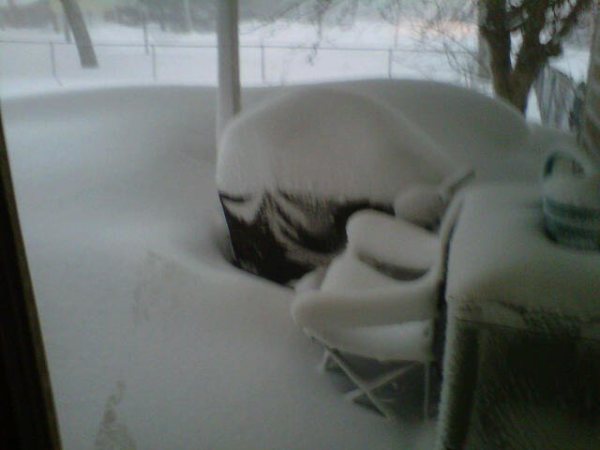
blizzard

The majority of us just push through and try not to give in to winter exhaustion.  The simplest task – an errand to the store, say – becomes a greater chore and drains more energy than necessary after wrapping up in layers, scraping the car, fighting through all the other drivers who’ve forgotten how to navigate this white stuff, finding one of the few remaining parking spots that hasn’t become a snow mountain, only to find that the items that you need are among the new shipment that is stuck on a truck up some impassable mountain pass or other and due who-knows-when.


Quite a distance from that isolation that I read in those books, but still in our modern way greatly affected by the elements.  We control so much in our modern world, but nature rules in these months and we humans find our way through.  And we fight to keep our schedule the same regardless of the season or weather, where those earlier folk adjusted their activities to accommodate the calendar.


The objective of this Daily Prompt was to teach, but sometimes the most important aspect of teaching is to get us to stop and think.  Why do we do what we do?


This post is written in response to The Daily Prompt: Teaching.


© 2014 BAReed Writing | Practical Business, All rights reserved
Cultivate Your Inner Two-Year-Old

I don’t think that this post will interest people who like to have a steady, few task oriented occupation.  I was thinking the other day that 2 year olds have it right to be so inquisitive.  The world is more interesting when you want to learn more about the things around you – how they work, why they are the way that they are.


Going farther back, I had a revelation about colic as I tried to soothe my sons when they were babies.  And suddenly I saw the world as they saw it and while my realization didn’t ease my own exhaustion and wish that they would just stop crying, it did give me empathy to continue my quest to bring them peace.  The revelation was just this – there is a tremendous amount of stimulation around us every waking moment of every day, lights, sounds, movement, touch and our senses are bombarded, we have learned how to process it all to the point that we are nearly unaware of how much stimulation is around.  But to a baby it is all new and disorienting.


By the age of 2, we can filter through the familiar stimuli and get drawn to anything new that tickles our senses.  We explore this new thing with delight and share this pleasure with anyone who might be around.  Who can’t help but be charmed?

DSC03720

Somewhere along the line, the curiosity and delight in new things dries up for many of us.  New things might start to mean more to do, or harder to understand, or any number of unpleasant associations.  Sadly.


I won’t deny that much of this reasoning can be true, but we miss out on new things that could be good by this wholesale shutting down.  I was thinking the other day about one of my least favorite responses to the cheerful good morning that I offer around the office, which is ‘what’s good about it?’.  I’ve gone to the effort to fire up my cheer and get a snarl in return?


Well, here is my hard-won answer to that question – the possibility.  I’m breezing through my own apprehensions and morning grumpy to cultivate my inner two-year-old.  There is possibility for something interesting, potentially delightful just ahead.  And I don’t want to miss it because I filtered it out.  If I channel this inner curiosity, I might just make more opportunities for myself at work by expanding my knowledge of the how and why of my work place.  What do you think?


© 2014 BAReed Writing | Practical Business, All rights reserved

Procrastinating Resolution Planning

Do you make New Year Resolutions?  Do you plan them, or are they usually spur of the moment ideas?  Do you make the same one every year?  Do you make progress on it?  Sorry, I don’t mean to seem like I am grilling – you have someone in your life for that, I have no doubt.  I am merely curious, really.

public domain image

public domain image

I remember in my childhood that we spent plenty of time at the dinner table talking about New Year Resolutions this time of year.  My mom would be captured by the idea of renewal and self-improvement on a mass scale for the first few weeks of each year and want to get us involved.  I don’t remember any of the actual resolutions that any of us made, of course.  The resolutions themselves were rather secondary to the intrigue of so many people embarking on new plans at the same time.

This was of course long before today’s media fascination, or should I say obsession, with Resolutions.  Maybe the media has just picked up on mom’s drum beat.

Dad was the list maker, and the head down, plow forward, get your chores done before fun kind of person.  He didn’t want to talk about getting things done, he wanted to get to it.  I’m pretty sure he mostly just listened to these conversations about resolutions.

I stopped making resolutions when I started to realize the repetitiveness involved and how few resolutions are actually acted upon.  I had a friend resolve last year to sparkle – I do hope that she came through on that one.  And I have a couple of other friends who have made big changes like healthier lifestyles and I admire their success.

It isn’t that I don’t have any need to improve aspects of my life, just that I don’t use resolutions to create progress on those fronts.  I have plenty of room for improvement.  I regularly resolve to keep on top of things, particularly finding ways to get myself to do the ones that I don’t like.  I just don’t do it around New Year with a capital R.

“We will open the book.  Its pages are blank.  We are going to put words on them ourselves.  The book is called Opportunity and its first chapter is New Year’s Day.”

~ Edith Lovejoy Pierce

© 2014 BAReed Writing | Practical Business, All rights reserved
The Quality of Sound

It looks as though we may be in for a cold and snowy winter season.  I’m sure that some of you are smiling and cheering but I am equally sure that there are plenty in my camp of winter endurers.  I believe that I have mentioned before some of the litany of why I am not a fan of winter – there is the cold, the snow, the slush, the cold, salt everywhere, exponentially bad driving and the cold.  Did I mention the cold?  I am also worn down by the monochromatic vistas – wonderfully dotted with Christmas decorations for the next couple of weeks.

But I digress.  There is one thing about winter that pleases me, which I rediscover every year.  This thing that quietly delights me is the quality of the sound when there is a blanket of snow on the ground.  The snow brings a silence that is very welcome in this time of electronic beeps, dings, trills, buzzes, and tweets.  Nature has many methods of redirecting our attention to joys it has to offer.

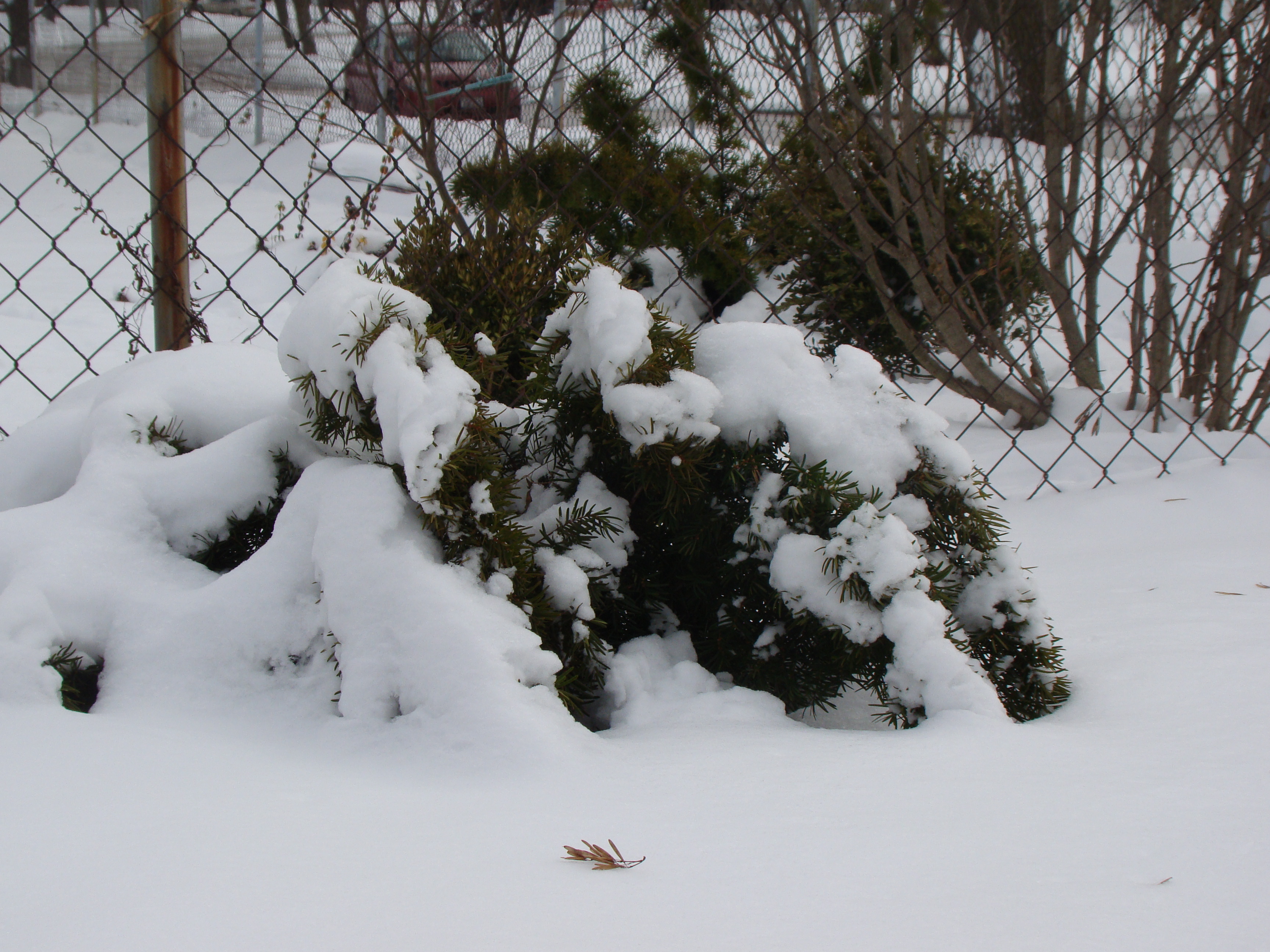
Looking for a means to soothe your hectic pre-Christmas day, go out into your backyard for a few minutes to commune with the quality of sound.  Softer sounds are muffled as the snow acts as natural baffles and round out many noises.  Sharp sounds crack, shattering the brittle cold air but are quickly replaced with that enveloping silence.

DSC03639

To get the full effect it is best to get to a park or nature preserve or any tract which is populated more by trees than the constructs of humans, but it isn’t entirely necessary.  Especially after dark.  Your backyard will do nicely.  If you haven’t taken the time to experience the way that snow changes sounds since childhood, I suggest that it is high time that you do so.

The crunch as you break through the crust of the snow, the sound of your own breath, the rustle of small animals, and the creaks and cracks of trees shifting under the weight of the snow.  These are the little gifts of winter.

© 2013 BAReed Writing | Practical Business, All rights reserved

Not an Optimal Time to Think

If we were to be asked, we would say that we should always think about what’s going on, what we are doing because it cuts down on mistakes.  And then there is reality, often a far cry from what is best practice.  Well, to err is human.


Ask a person how something went wrong – a car accident, a work mistake, hurt feelings after a callous comment – and the answer most likely boils down to ‘I didn’t think’.  Too much was going on in that person’s mind at that moment and the most immediate task became the casualty of the overtaxed thinking process.

thinking

This is why we practice things, why we drill something over and over, so that the activity creates a sort of groove in our brain and that memory kicks in every time we take up that activity.  (Think of the times that you have been tired and pulled into your driveway and realized you don’t remember the trip at all.)  All that practice makes it more possible that we’ll do the right thing even if we might be fighting panic or illness or something else entirely.  But it isn’t foolproof.


I have tacked up bits and scraps of paper near my writing desk (which I rarely use now that I have a laptop…), these scraps hold advice on writing from past well-known writers.  One is apropos for today, because it can be applied to thinking as well as writing.  It is Herman Melville who said it, but it comes to us through Sarah Paretsky; a writer must be in a ‘silent grass growing mood’ in order to write.


Think of all the times that you know a thing but it just won’t crystalize in that moment.  Most likely because that moment isn’t an optimal time to think – there is noise, distraction, pressure coming from somewhere and clouding your thought process.


I equate this to my math difficulties.  My brain shuts down on any math when I am in a group.  This goes back to a horrid game that was suddenly introduced to me on a steel gray February morning in 2nd or 3rd grade.  I had just moved to the school, so my classmates had been practicing this game for months.  To this day my brain simply says no if I have to do math when there is any attention on me.


I needed a silent grass growing mood to get a firm grasp on math concepts and then practice to gain speed before I played that stupid game.  Even understanding the root of my math anxiety, it is rarely an optimal time for me to think in mathematical concepts when I’m in public.


© 2013 BAReed Writing | Practical Business, All rights reserved

Unexpected Pleasures

Obligations, have-tos, to-dos, endless tasks mounded here and there in front of us until the end of time.  Or so it often appears.  Why look up and out when only these nagging things are there to confront us?  Why look about when more might present themselves and insist on being addressed?

Well, serendipitous things can happen if you look up and look about and you can miss them if you are mired in the mundane.  I had two quite serendipitous experiences last week and I am still smiling in remembering each.  Dreary and rainy days, both.  Bleh.

Walking out the back door from work at the end of one day with a colleague, we were met by the beautiful sight of a perfect and complete rainbow.  The north side ending picturesquely behind trees decked out in their finest fall colors and the other blocked by the industrial building behind ours.  The entire arc completely visible, which is even more rare than a rainbow itself and therefore to be savored.

public domain rainbow image

public domain rainbow image

My mom always took particular delight in rainbows, so I couldn’t help but think she had a hand in this gift from nature as I drove home and watched it fade.  Quite pleasing and smile inducing, still.

Then on a different day, running errands at the store, I rounded the corner into the dish soap aisle and saw someone I know who I haven’t seen for almost a year.  She had her back to me, but I was instantly both slightly disoriented to see her and certain that it was her.  (Just to add to the serendipity, when I went to put away the dish soap later at home, it turned out that I still had an unopened bottle in the cupboard so if I hadn’t imagined that I was in need I would not have even been in that aisle.)

We stood in that aisle and caught up for almost an hour, moving over for various other shoppers who were focused on their mission.  It was so good to see her and such happenstance it gave me a nice boost.

Neither of these little moments would have been noted if I hadn’t been looking up and around, aware of my surroundings.  I’m so glad that I was.

© 2013 BAReed Writing | Practical Business, All rights reserved

Fair and Equitable

photo credit: Wikipedia

photo credit: Wikipedia

I don’t much believe in astrology except that I am very interested in balance and I was born under the sign of Libra – which is represented as a scale.  Coincidence, perhaps.  Fair and equitable are worthy objectives when searching for a solution to anything within a group.  But blasted hard to achieve sometimes.

Mainly because these are very subjective words – how a person defines fair is very much dependent upon factors in their life that have little or no bearing upon the current situation.  Or perhaps upon the definition of the word fair in the dictionary.  I can’t control this, and can only account for it minimally in crafting any solution.

Does this mean that I should not attempt to be fair and equitable?  Absolutely not.  Even if something is difficult to achieve, it is often a worthy goal.  Fair and equitable is always a worthy goal.  (And not worth tracking how often you achieve – but perhaps worthy tracking what didn’t work with a particular group and why…)

Like right at this moment is it fair that the dog is standing on the outside of the sliding doors looking beseechingly at me, wanting to come in, while I type?  Yes, it is – I don’t want to lose my train of thought and it isn’t overly cold, there is no rain and most likely another dog out on a walk will be by shortly to distract her.  That’s my call, you may make a different determination of fair in this example.

Generally the best thing that a person can do is to decide what rules, based on their own experiences plus current circumstances, constitute fair and equitable.   If you don’t know what these look like for yourself, how can you possibly begin to apply them in larger settings such as within a group?  Yes this takes thought and effort.  Yes it can be uncomfortable.  But you will have a stronger position if you put the effort into clearly defining your own position.

Then you can build on your own general definition to determine what is fair and equitable within the context of different situations and groups.  You can take into account the make-up of the group itself, or the specifics of the situation.  Are there extenuating circumstances?  Is this on-going or one-time?

I’m going to go let the dog in now.  What does fair and equitable mean to you?

© 2013 BAReed Writing | Practical Business, All rights reserved

The Details of the Day

(I recently enjoyed reading The Remains of the Day by Kazuo Ishiguro, so a nod to his title that I’ve played off of here.)


It is the details of a thing that either serve us well and move our plans forward, or that trip us up.  Back in school, if we answered that the civil war happened sometime in the 1800s we most likely were marked wrong on a test and asked for more detail if it was a class discussion.  While vaguely correct, the level of detail needed for accuracy is missing in this broad answer.


Impressions stick with me – the patterns of a process, reactions of a person or a group – but not details.  When I need to remember something, I search in my memory for any placeholders such as what day it was, who might have been there, where I was located.  If I can recreate the scene to a moderate level of detail, I have a better chance of retrieving some specifics.  I rely upon notes to dig deeper and bring back greater, finer details.

Claude Monet's 1882: The Church at Varengaville, Grey Weather, photo credit  Wikipaintings

Claude Monet’s 1882: The Church at Varengaville, Grey Weather, photo credit Wikipaintings


In my family, I am the de facto keeper of memorabilia – all the physical prompts that open the flood gates of ‘remember when’; the pictures and trinkets of our past.  These are talisman to bring up those impressions of large, small, important, and mundane activities and moments of life.  What we each produce of this memory and then share can become a more complete recreation of the original since we each have different sensibilities which trigger what and how we will remember something.


In business, I have honed the note taking that I learned in school (and diverge from my regular method at my peril) to develop a pretty good practice which records the right level of detail for retention and reference later.  The notes help me to get from that overall impression level of detail into more complete who, what, where, when, why particulars.  When I am really on my game, I sift back through the notes as soon as possible to develop the next level of associations – what goes with what.


I have a habit of writing call notes that has served me very well in personal as well as professional business.  I learned this habit the hard way when faced with retractions or changes to agreements and could only go back to my own impressions of the previous interactions.  Now when I can say that I called on this day and spoke to this person and was told this specific thing would happen, I am more likely to get the result that I expect.


Impressions of events are fine when sitting around at a family gathering and bringing out the old pictures to indulge in ‘remember when’.  But we all need to have methods of retaining finer details when it comes to moving our plans forward and keeping them on track.


© 2013 BAReed Writing | Practical Business, All rights reserved

Celebrations, Work Style

We need to have reasons to celebrate – a birthday, a marriage, a new baby, a retirement, an anniversary.  Giving homage to our milestone moments makes the slog through the mundane day-to-day and those darker moments more possible.  Things are better with a smile, camaraderie and a bit of cake.

We are at work to work, but we spend a goodly chunk of time with our workmates and therefore it is important to bond.  We bond when we share the weight of difficult tasks and we bond when we share the light of a celebratory moment.  We just have to figure out what the right amount of time and effort to apply to sharing these moments – both good and bad – and this right amount is different at each office or work place.

Memory of birthday decor past... (not telling how long past)

Memory of birthday decor past… (not telling how long past)

What outward evidence is permissible?  Decorations set the mood and can bring a smile to everyone even as people work away.  But where is the line for over the top?  I think we have all seen cubicles that wind up looking like a whole party store was crammed in.  Tasteful would be a good line, but it means wildly different things to different people.  Most cube walls could do with a bit of holiday or personal celebration type décor now and again.

Joyfulness creates energy, which can power a team to be productive with a smile.  At least until the sugar high from the cake wears off.  Then it’s time to get more goodies.

Oh, by the way, this topic was on my mind because today is my birthday.  If you are looking for me, I’ll be the one with the tiara – while I have decided to stop aging, I do like to celebrate the anniversary of my birth.

What level of gaiety is allowed at your work place?

© 2013 BAReed Writing | Practical Business, All rights reserved
And Repeat Until Retirement

Sometimes a post idea comes to me and I struggle for a title.  Sometimes I manage to come up with an idea and a title together.  And sometimes I just get a title.  Today, I was thinking along the lines of repetitive tasks – there is a world of lather, rinse, repeat beyond shampoo – and this title popped in.

It seems as though we think, as children, that we will put thought into what we want to be; get the appropriate training in our early adult years; get the appropriate job for that training at a good company; achieve regular gains in pay and work load based on experience; and retire at the right time.  Ding, work life recipe complete.  And perhaps that did work for a chunk of the population for a space of time.  (I hear tell that the Millennials have different ideas of a career – do share.)

We do need to have a balance of the expected – certainty – to go along with all of the variables – marry or not, and who?  Where to live?  Children?  And somehow our working segment seems a reasonable portion to place our hopes for regular, certain, blissful sameness.  We can handle life’s changes when we know there will be familiar expectations here and there.

While I have been aware of this sort of assembly line progression of career, I have taken a different tack.  I understand why this notion can appeal.  Just for fun, I make lists of all the bits and pieces of life that we are supposed to keep up on and it is eye-popping.  Also, not feasible – something must go on auto-process.  Something has to be chosen to fend for itself.  Benign neglect.

Capture

I am not suggesting that people don’t take pride in their work, don’t want to be valued.  Not at all, just that there isn’t a necessarily a conscious review of current status versus a planned trajectory.  The focus is on the set of regular tasks.  It is expected that completion of tasks will carry up to keep on that trajectory until retirement.

Does this work out?  Yes, for some.  Certainly it has led to a rude awakening for others.  So the question comes down to deciding whether it is working for you – is your current activity meeting your expectations?  If so, repeat until retirement, with occasional re-verification.

© 2013 BAReed Writing | Practical Business, All rights reserved

The Sarcastic Muse

Writing. Information. Inspiration. Sarcasm guaranteed.

Stefanie O'Connell

Just another WordPress.com site

Retirement - Only the Beginning

Retirement Planning Beyond Financial

Voices In His Head

Recognized as Blog Of The Year! (unfortunately, it was given the year 1910, the start of the Great Depression)

O at the Edges

Musings on poetry, language, perception, numbers, food, and anything else that slips through the cracks.

BAReed Writing, Business Writing

Clear, professional writing is closer than you think.

Dancing Beastie

Seasonal living in a Scottish castle

eyeslikecarnivals.com

Clear, professional writing is closer than you think.

Blog to Work

Blogging your way to a job.

michelleshaeffer.com

Simplifying Business Chaos

Always The Write Time Blog

by CHRIS MADAY SCHMIDT

Art of Non-Conformity

Clear, professional writing is closer than you think.

xplorenorthshore

Smile! You’re at the best WordPress.com site ever

Medievalists.net

Clear, professional writing is closer than you think.

The Creative Penn

Clear, professional writing is closer than you think.

Gifts Of The Journey

The Fearless Pursuit Of A Life Worth Living

The rising tide

Through The Glass Darkly

an interconnected life...

Discovering the threads that connect us, one story at a time.

TED Blog

The TED Blog shares news about TED Talks and TED Conferences.

animatingyourlife

A great WordPress.com site

Second Star to the Right

and straight on 'til morning

CAHOOTS

Success is meant to be shared

Farmlet

Living cheaply and richly on an acre in Puna, Hawaii

J T Weaver

When you got nothing, you got nothing to lose. — Dylan.

Gen Y Girl

Twentysomething. Annoyed with corporate BS. Obsessed with Gen Y. Not bratty. Just opinionated.

Jenna Dee

....living with a following wind

Doublewhirler

iPhone vs Camera

Book Hub, Inc.

The Total Book Experience

The Write Project

looking for light in a weary world