Tag Archives: Thinking

Lessons Last Week Lined Up to Reinforce

Socrates & Plato are still teaching us.  (photo credit: Wikipedia)

Socrates & Plato are still teaching us. (photo credit: Wikipedia)

We pack our early years with schooling and then often let our learning muscles get a little out of shape.  (And then you have to learn PowerPoint, uh-oh.)  Life has a tendency to provide us with plenty of opportunities that reinforce lessons we have previously learned, if we are paying attention.  I had two chances last week, that I noticed.

I like the idea of mindfulness, but it just isn’t possible to practice 24/7 – if you have found a way, please share.  I probably missed a few things that I saw as mundane at the time and not something with more substance.  And I am usually in the mindset to look for depth, patterns and opportunity.  Do you remember to look beyond, or deeper into the immediate task sometimes?

An important role for a leader is to help people recognize their own abilities to resolve situations and to provide tools and space to practice these skills.  I’m deep in learning mode right now, there are many things that I don’t know in detail.  My team knows the details and it is my responsibility to make sure that they have what they need to complete the tasks and keep things moving.  My responsibility is to offer alternatives to keep things moving, and encourage.

Being prepared means many things – practicing, familiarizing, and centering.  I had a chance to do a speech for Toastmasters in an unfamiliar space.  I had the speech itself cold (although I hadn’t practiced some changes well enough and left them out) but I didn’t take an opportunity to go stand up at the front and familiarize myself with the space.

I know better, we spent plenty of time on blocking (figuring out where to stand and move in a scene) in my theater days.  Blocking will change based on the space that you are working in, so in theater we block in the practice space and re-block once we move to the stage.  If we do a good job, we won’t look awkward when we have an audience.  I probably had some awkward moments in my speech that could have been avoided if I had just gone up to the front of the hall when I got there.

Then there is centering – taking that moment to get right in the head.  Don’t do it at your peril.  Do it half-way and pay the consequences.  This is particularly a lesson that many of us have to relearn, sometimes daily.   I did it half-way.

It was a mistake, that impression that many of us got in school that lessons only had to be repeated if we weren’t smart enough.  Repeat lessons come along to give us an opportunity to refocus, that’s all.  A chance to improve.

© 2013 BAReed Writing | Practical Business, All rights reserved

The Details of the Day

(I recently enjoyed reading The Remains of the Day by Kazuo Ishiguro, so a nod to his title that I’ve played off of here.)


It is the details of a thing that either serve us well and move our plans forward, or that trip us up.  Back in school, if we answered that the civil war happened sometime in the 1800s we most likely were marked wrong on a test and asked for more detail if it was a class discussion.  While vaguely correct, the level of detail needed for accuracy is missing in this broad answer.


Impressions stick with me – the patterns of a process, reactions of a person or a group – but not details.  When I need to remember something, I search in my memory for any placeholders such as what day it was, who might have been there, where I was located.  If I can recreate the scene to a moderate level of detail, I have a better chance of retrieving some specifics.  I rely upon notes to dig deeper and bring back greater, finer details.

Claude Monet's 1882: The Church at Varengaville, Grey Weather, photo credit  Wikipaintings

Claude Monet’s 1882: The Church at Varengaville, Grey Weather, photo credit Wikipaintings


In my family, I am the de facto keeper of memorabilia – all the physical prompts that open the flood gates of ‘remember when’; the pictures and trinkets of our past.  These are talisman to bring up those impressions of large, small, important, and mundane activities and moments of life.  What we each produce of this memory and then share can become a more complete recreation of the original since we each have different sensibilities which trigger what and how we will remember something.


In business, I have honed the note taking that I learned in school (and diverge from my regular method at my peril) to develop a pretty good practice which records the right level of detail for retention and reference later.  The notes help me to get from that overall impression level of detail into more complete who, what, where, when, why particulars.  When I am really on my game, I sift back through the notes as soon as possible to develop the next level of associations – what goes with what.


I have a habit of writing call notes that has served me very well in personal as well as professional business.  I learned this habit the hard way when faced with retractions or changes to agreements and could only go back to my own impressions of the previous interactions.  Now when I can say that I called on this day and spoke to this person and was told this specific thing would happen, I am more likely to get the result that I expect.


Impressions of events are fine when sitting around at a family gathering and bringing out the old pictures to indulge in ‘remember when’.  But we all need to have methods of retaining finer details when it comes to moving our plans forward and keeping them on track.


© 2013 BAReed Writing | Practical Business, All rights reserved

Truth can Mean Pain, Discovered Avoidance will be Excruciating

Sometimes post ideas come from the most fleeting of thoughts and I have to be quick to get the essence of the idea down in a notebook that I carry.  (I was just at a conference where they reminded us all that science has found we forget about half of what we hear/see within 24 hours, and the forgetting just goes on exponentially from there.)

I meant to write down the occurrence behind this post idea, but it is lost.  Certainly this is a lesson that I tried to teach myself many, many times in my younger years.  I was steadfast in my practice of avoidance for too many years.  Foolishly, ridiculously so.  Until I finally saw the pattern.  And realized that truth can have power.

truth

The movie quote, “You can’t handle the truth.” (Most men I know can practically recite the whole movie.  This quote is Jack Nicholson’s character in A Few Good Men) seems to sum up the way that many of us relate to the truth.  For whatever reason we create all sorts of alternate reality scenarios and often these get tripped up in one way or another and we are faced with myriad consequences.  Mostly unpleasant ones.

On the other hand, when people expect defensive behavior on your part you can regain control of a conversation when you tell the truth.  It has taken the wind out of more potential rants than I have kept count, people were actually disappointed because they had clearly practiced words for a protracted argument.  My simple, ‘I’m sorry, I didn’t realize my action x would lead to issue y for you.  How can we fix it?’ stopped them up.  Of course, even better is to go to them when you know something might affect them, and I learned this too, finally.

Your right now self might be tired, but your future self has other things to do than to clean up after you.

© 2013 BAReed Writing | Practical Business, All rights reserved
Forward, Yes, Looking Over a Shoulder

Life moves us ever forward.  We have one day after another – some are good and some not so much.  There are people who are good at looking forward, planning and making sure that this progression of days add up to a larger something; and on the other side of the spectrum there are people for whom every day is a surprise.  Then there are all of the rest of us in between.

forwardBut which way are we looking most often?  Forward, back, all around?  Like driving, we know that we should shift our focus between all of these views, but depending on our personality and experience we tend to settle into one habitual viewpoint.  We lose range of motion after some time of this single default viewpoint.

The best mix of forward, back and all around gives us the richest context.  We need that backward historical viewpoint to provide some recognition to new things.  (This is similar to that old thing in certain ways.)  Adding in the forward helps the new thing to reveal previously unexperienced, and possibly beneficial, perspectives and knowledge.  All around provides balance and depth – we can better decide what weight to apply to everything.

But we need something to push us off our preferred viewpoint, most likely.  Do you regularly use the past to decide what to do today?  Do you look forward to new experiences?  How often do you switch it up?  I liken it to changing lanes when driving – even though I know that I should turn my head as well as using my mirrors I find that I can slip into a bad habit of just using my mirrors and perhaps a quick sideways glance.  Not good.

I have had a Physical Therapist remind me that many of our motions are forward focused, so even though we start out with great range of motion we lose a lot if we don’t deliberately stretch out and back too.  We need to do this with our minds too – our default viewpoints.

Have you put much thought into how your viewpoint affects your ability to move forward?

© 2013 BAReed Writing | Practical Business, All rights reserved

What am I Supposed to Do with All this Information?

We are bombarded with information wherever we go, look away for just a moment and another ton or so has been added to the pile.  All of it vying for our attention.  Whew, how to figure out what is important, what is useful, what is filler?

Coping methods abound, but should they really be broadly applied?  And most of them seem to deal with the mechanics of organization as opposed to the how-to of information processing.  Weighting, sifting, categorizing, pattern recognition – information triage.

mental-springcleaning

I remember along about when my boys hit middle school realizing that they didn’t seem to know how to study properly – what to put into notes, how to organize those notes, how to weight importance of the lessons provided.  I looked around for additional assistance, a tutor or program, but all were focused on improvement in the direct skills – math, reading, etc. – that my boys were quite capable of learning on their own.  I could not find anything that would help with the soft skills of study habits or information organization.  The people that I contacted seemed to be confused about my request.

At work, I have encountered people who need assistance deciding how to prioritize the pile of work in front of them.  Sometimes this is because there is simply too much of it, but sometimes it is the same issue as for my boys – how to process information effectively was not part of any curriculum they had encountered.  There seems to be an assumption that people will naturally know what to do with the information provided and therefore the focus of teaching has been on providing the information.

I wish that I could say I remember how I was taught to process information – because I am certain that I had lessons on this skill along the way.  Perhaps it was in such small increments, here and there, that I can’t pinpoint any moments.  My ‘aha’ moment has been that this is something that I can share with others, not how I acquired the knowledge.

Of course, this doesn’t mean that I don’t have places in my house where piles of information await my attention.  (Good thing my dining room table has a sturdy pedestal.)  And I wish that it meant I had a magic method of whisking away extraneous information without having to take time to look at it!  Plus there is always the brand new information that takes longer to sort because I don’t know the identifying factors yet.

How have you decided to process all the information that comes your way?

© 2013 BAReed Writing | Practical Business, All rights reserved

Change of Season

In my early twenties I lived in a couple different places in California for a few years – they have cool summer and warm summer and not much else.  Rainy season and drier season.  I thought that I would enjoy the no winter part, but found instead that I dearly missed spring and fall.

DSC03532

I have spent the majority of my life in the Midwest where we have all four seasons – though to varying degrees.  (I liked living in the mild winter parts the best, but then the summers are a bit more intense – no such thing as perfect.)  I’m not a winter person, though there is something to be said for being out on a cold crisp winter night.  I can get my winter fix from photographs and movies.  Summer has its benefits, but a bit too hot for my taste.

And it wasn’t until my California experience that I realized the importance of spring and autumn for me.  That is where it is at – the world wakes up and comes back to showy noisy life in spring, and offers a final burst of color and crunch before slumbering in the fall.  I can put up with the inconvenience of winter to enjoy these seasons.  (Of course, if I could find a means to migrate like the birds every year I wouldn’t turn that down.)

I get a bit wistful in the fall, don’t you?  Each season seems to have a predominant sentiment associated with it which gives us the opportunity to change our thinking with the change in season.  I’m sure there are contrarians out there who have a very different response.  I start out with my usual thoughts on all of the summer activities that once again I did not partake.  The days were long and invited the thought that I had plenty of time, take it easy.

Suddenly the days are getting shorter and there is a hint of crisp in the air.  The geese are honking in formation over my house, but the windows are still open to let in the warm breeze.  Ah – woulda, shoulda, coulda got me again.  But, not in all ways – I have learned a little something – I do have a short list of summer activities I did accomplish.

I’m going to make a point not to get too wistful in my posts in the coming weeks – help keep me honest, will you, let me know if you think that I do.  Plaintive is good – in rotation with other viewpoints.

What is your favorite season, and why?

© 2013 BAReed Writing | Practical Business, All rights reserved
Dis-orientingly Familiar

I have lived in many places in my life – sometimes you can pass through a place, even live there for a good chunk of time, without the place grabbing much of a hold on your memory and other places dig deep roots into your heart, even in a short stay.  And the place that prompted me to write is one that dug deep.  It was nice to get a chance to go back recently, even briefly, and check how the town and some of the people that I know are faring.

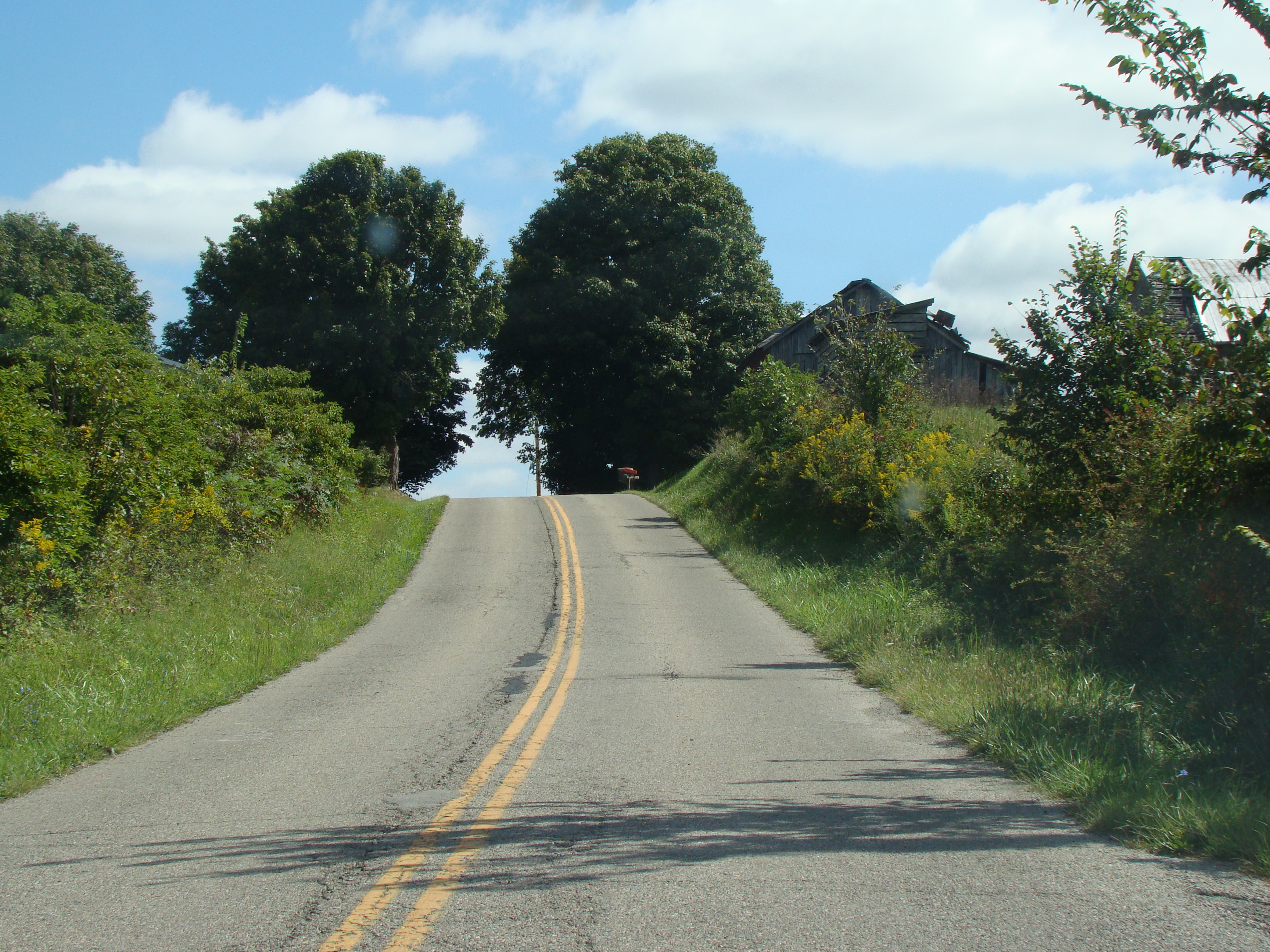
Living now in the Chicago area, there isn’t much contour to our prairie, but this area has plenty of hills and valleys.  Some of the state routes and other roads connecting towns used to be 2 lane back roads with character including twists and turns – but over time through government investment, need due to heavy use, and hard work of construction workers these routes and roads have become 4 lane highways and therefore been straightened out and lost character.  It is now faster to get from one place to another, and you don’t have fear what might be taking that next curve wide, but the scenery is blander.

more Jisco West

Progress seems to smooth out personality.

I’ve noticed that this seems true with clothing and buildings as well.  Look at items that were made painstakingly by hand in previous centuries and you will see intricate work that we don’t see in many of our modern items – straighter lines, more uniform.

I know this thing, if not clearly anymore, I know it viscerally.  This is where the old road went that way.  This is where the door used to be.  Even if you haven’t lived many places I bet you can identify – think about when you have visited some place and found that they have similar street names.  Which makes you think twice as hard to get from A to B – is it your usual A to B, or a different one that should not overlay existing information?  Names are the same, but contours and results are quite different.

We know it, but we don’t and it is disorienting.  Our brains stutter to gain certainty – this, no that, um.  Breathe, not panic.  Familiar, why?  What fits with what?  Set aside the unknown for a moment, focus on the known – even vague misty known.  And click.  Understanding starts, disorientation recedes.  I am here, now.  Whew.

© 2013 BAReed Writing | Practical Business, All rights reserved
Time Out Moment

Adults have been putting children in time out for decades, hundreds of years when you take the old Dunce chair into account.  Yet, somehow we don’t seem to realize when we should give ourselves a time out.  Everyone could use one now and again, regardless of how measured some people are overall.

The time out is intended to give the child time to get hold of their emotions – of course, particularly for a child, it should include vigorous exercise, not sitting still, to rid the body of that kinetic energy.  (Wherever do we think that energy is going to go?)  But that point is for another time.  We assume that through the various methods applied by our caregivers we have developed the skills needed to keep ourselves under control now as adults.

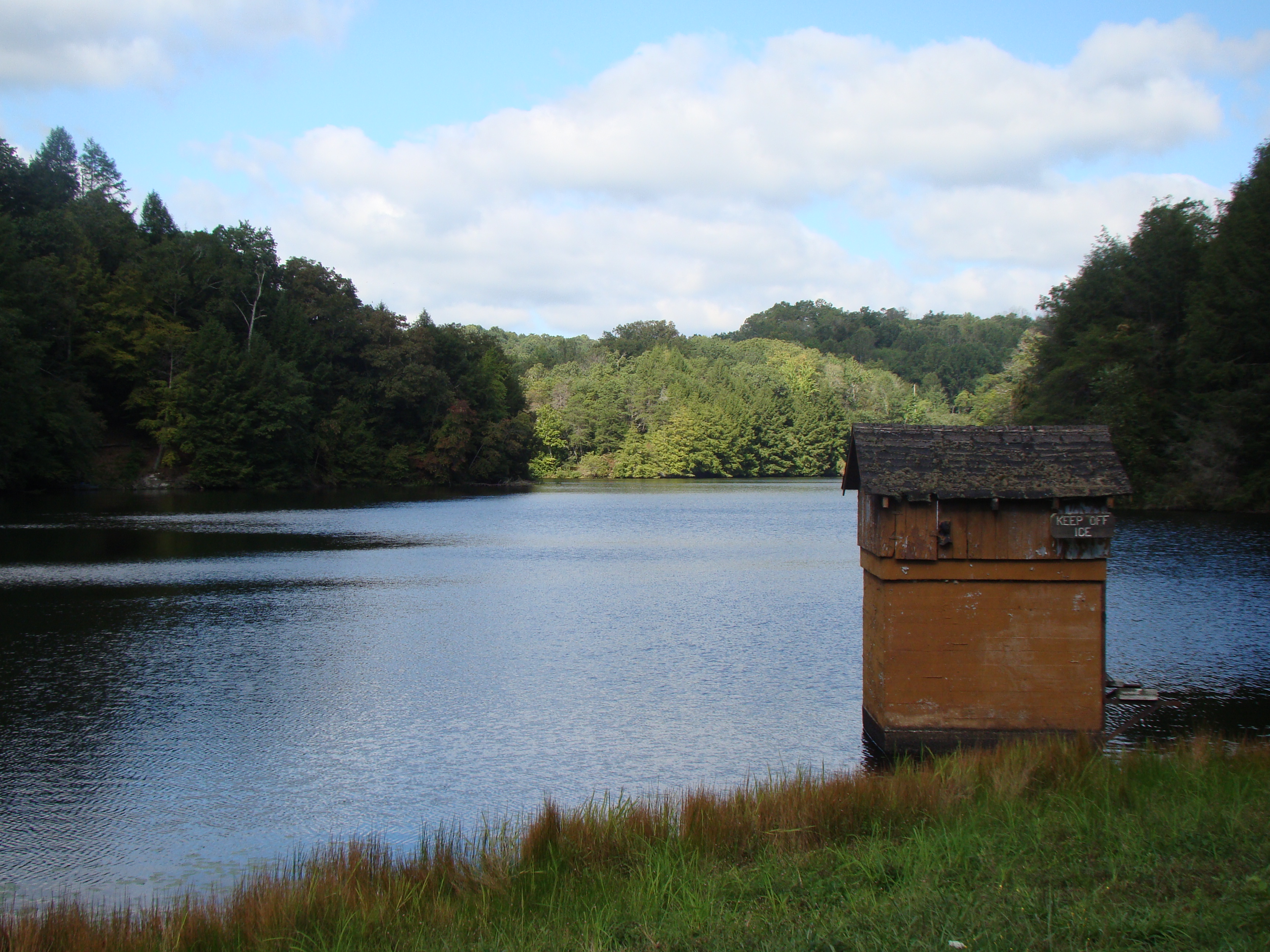
Too bad we can't have a time out spot like this nearby when we need it.

Too bad we can’t have a time out spot like this nearby when we need it.

But due to uncertainty, lack of sleep, low blood sugar, a chaotic event, illness, fear, want/need, or many other forces we don’t always have the control that we ought over our own responses.  We need to give ourselves a time out moment.  A step back, breathe, assess, consider, reconsider opportunity before we speak or act.

People who are more measured by nature are better able to build this need into their interactions.  Impulsive people, and all of the others in between measured and impulsive will have to practice awareness first – to identify that they are getting to a point where a time out is a good idea.  I have varying success with this recognition myself.  When I need it the most, I don’t seem to have the right access.

When I am just a bit stressed, but still aware I realize that I can rely upon my breathing to give me the best clue.  When it becomes shallow and tight, I stop whatever I am doing.  Then I get moving – this is always a good time for a restroom break – to change my blood flow, plus a change of scenery gives your mind a chance to re-channel thinking – and the physical activity will start to burn some of the psychic energy that is causing the need for a time out moment.  I focus on deeper breathing while moving.

We all have a lot on our mind, our plate – whatever – a time out moment now and then to reflect helps immensely.

© 2013 BAReed Writing | Practical Business, All rights reserved

Deciding to Deal with Decision Fatigue

Each person on a team needs to be able to show a willingness to make decisions, not just the leader.

thinking

The average adult makes well over 100 decisions each day, not all of them are made consciously because habit and avoidance or procrastination are decision types too.  You start your decisions for the day with the choice of how you respond to the alarm and go from there.  Of course there is research that shows our ability to make sound decisions can actually be eroded by the need to make a large number of decisions, a sort of decision weariness.  The official wording is decision fatigue.


Being the President would require the need for making a large number of decisions in any given day, here is his take on reducing the need for smaller, daily decisions:

“You need to focus your decision-making energy. You need to routinize yourself. You can’t be going through the day distracted by trivia.”

~ Barack Obama


Thankfully you aren’t the President, but it is still a good thing to think about how you perform on a busy day when many different things are thrown at you – do you carefully consider each new request, or does your brain get more and more focused on how busy you are and actually consider the activities you are undertaking less and less?  Or, to counteract decision weariness, do you prioritize decisions and apply some simple concept to address routine decisions?


You need to take a look at the methods and tools that you are using to make decisions and take it another step.  Each of us, whether we realize it or not has a method, but we need to evaluate that method for effectiveness – you must establish your own criteria.


“Fact is, some lives are so filled with impedimentary drama and ancillary decision-making that there is little time left over for work.”

~ Robert Genn


How do you make sure that you aren’t falling into a rut?  That you are saving your decision making energy for the helpful decisions and not expending it all on what to wear that day, what to have for lunch, what email to answer first?


Sometimes the best decision that you can make is to decide your own criteria for making good decisions.  And part of that is to make sure you conserve your decision making energy for the right decisions.


My original post was on 12/14/12 – Decisions, Decisions, Decisions.


© 2013 BAReed Writing | Practical Business, All rights reserved

Mental Reset Via Road Trip

My parents were raised in the same medium sized Midwestern city, but moved away to follow my dad’s job early in their marriage.  This meant that from a small age, I was used to getting in the car for a drive to see extended family.  Being in the car meant dad driving, always.  Mom variously would start games with us, get us to sing rounds, read or sleep.  There came to be a rhythm of family interaction and personal introspection that I found pleasant.

776 turn

Ever since being on my own, I have sought out a road trip or two each year because of this thought rhythm.  New sights outside the car window can be triggers for new thoughts and ideas.  (And blog posts.)


“Your assumptions are your windows on the world.  Scrub them off every once in a while, or the light won’t come in.”

~ Isaac Asimov


Just like the country in general, my life has been churning a lot of change in the past year or so and a road trip was just what I needed to think, adjust and let the light in.  I am back from a very quick trip to an area that I called home for several years.  It is a small town, county seat, in a rural setting.  It gave me a chance to think while on the road, and to get a bit of green therapy in places that we used to go hiking.


Even if your life has been same old same old, it is helpful to figure out a way to scrub off your assumptions and there is nothing like a change of scenery to do it.


I have this conversation with myself during almost every road trip – this is the time that I will make a point to not be so stuck on getting to my destination, but stop at some of the local places that post signs along the road.  I know that it is important to expand my perception once in a while.  On the way home I did just this, and reminded myself that it was fun as I was grumbling about pulling into my garage so late at the end of the trip.


How do you give yourself a mental reset once in awhile?


© 2013 BAReed Writing | Practical Business, All rights reserved

The Sarcastic Muse

Writing. Information. Inspiration. Sarcasm guaranteed.

Stefanie O'Connell

Just another WordPress.com site

Retirement - Only the Beginning

Retirement Planning Beyond Financial

Voices In His Head

Recognized as Blog Of The Year! (unfortunately, it was given the year 1910, the start of the Great Depression)

O at the Edges

Musings on poetry, language, perception, numbers, food, and anything else that slips through the cracks.

BAReed Writing, Business Writing

Clear, professional writing is closer than you think.

Dancing Beastie

Seasonal living in a Scottish castle

eyeslikecarnivals.com

Clear, professional writing is closer than you think.

Blog to Work

Blogging your way to a job.

michelleshaeffer.com

Simplifying Business Chaos

Always The Write Time Blog

by CHRIS MADAY SCHMIDT

Art of Non-Conformity

Clear, professional writing is closer than you think.

xplorenorthshore

Smile! You’re at the best WordPress.com site ever

Medievalists.net

Clear, professional writing is closer than you think.

The Creative Penn

Clear, professional writing is closer than you think.

Gifts Of The Journey

The Fearless Pursuit Of A Life Worth Living

The rising tide

Through The Glass Darkly

an interconnected life...

Discovering the threads that connect us, one story at a time.

TED Blog

The TED Blog shares news about TED Talks and TED Conferences.

animatingyourlife

A great WordPress.com site

Second Star to the Right

and straight on 'til morning

CAHOOTS

Success is meant to be shared

Farmlet

Living cheaply and richly on an acre in Puna, Hawaii

J T Weaver

When you got nothing, you got nothing to lose. — Dylan.

Gen Y Girl

Twentysomething. Annoyed with corporate BS. Obsessed with Gen Y. Not bratty. Just opinionated.

Jenna Dee

....living with a following wind

Doublewhirler

iPhone vs Camera

Book Hub, Inc.

The Total Book Experience

The Write Project

looking for light in a weary world