Category Archives: Work Life

An Acceptable Level of Chaos

The known and the unknown.  Order and its opposite – disorder, mess, chaos.  The traditional dramatic struggle is between good and evil, but every day life’s struggle is in the intersection between order and control or varying levels of chaos.  Even people who aren’t drawn to structure, who are comfortable in ambiguity, need some touch points of order – normalcy.


Whether we actively and consciously understand our own needs for order, or we lash out in unease caused by too much chaos too close, every one of us has an acceptable level of chaos.  When we can still mostly function, beyond which we get bogged down.

The Course of Empire Thomas Cole, 1836 - public domain image

The Course of Empire Thomas Cole, 1836 – public domain image


Somehow I learned fairly early on that I could create some of the structure that I need to feel comfortable in my environment.  I am thankful for this since it has greatly helped me to navigate my life.  I know immediately that when anxiety starts to build that I should take a breather, mentally take stock in all that is going on around me and identify a few simple things that I can straighten out.  I know that to press on will be foolish – and yet sometimes I press on.


Even knowing the level of order that I prefer, having such an interest in problem solving as I do, I am finding that the level of complexity in our modern life – the amount of oversight and active monitoring that is necessary on my part to get an acceptable level of service from the companies and people that I interact with – is exhausting.  I can’t begin to imagine how people who have a much stronger need for order, or people who find standing up for themselves a challenge, manage these interactions.


I didn’t mean to sound stilted in this post, but I am trying to wrap my head around a solution to this encroaching chaos.  It feels too close lately, in too many areas of my life.  Naming it is the first step to a solution.  Finding joy, or having a laugh will reduce the anxiety while I continue to sort through.  Finding some easy wins will give me a little boost of energy to press on.


How are you managing your chaos?


© 2014 BAReed Writing | Practical Business, All rights reserved

That Little Push

The sun rises, and even on a cloudy day, the world around us starts to wake up – circadian rhythm kicks in.  External and internal prompts work together to give us a little push to start our day.  Routine, or the schedule for that particular day take over to encourage our next moves.  Is the pull of that day’s activities enough for me to push myself forward into it?

Probably very few of us found our internal drive worked consistently in our growing years.  Little and big pushes to do this or that had to come from external sources – mom, dad, teacher, coach.  The object was to teach us to develop our own internal drive, to push ourselves to do the things we needed to do so that we could achieve the things that we wanted to achieve.  Oh, we needed no push on certain days, for something exciting – up, fed, dressed and maybe even got a few things ready for mom and dad.

DSC03753

Once we launch into our ‘real’ lives, our adult post-school experiences, that’s when we find out how well we internalized the push – our ability to create and implement a daily schedule.  Some people do it so well, they can plow through even the most onerous chores without having to cajole themselves in any way.  Some of us become leaders and push ourselves and our team through the good, bad, and the tedious.  Many of us become parents and suddenly want to apologize to our own parents on a regular basis if it will help our children to find that internal push sooner and more strongly.

I don’t like to leave things hanging, but there are tasks that I dread or dislike doing.  And then there are the ones that I’m not entirely certain how to move forward.  I can usually figure out some means to push myself to do these things.  Although sometimes I have to give myself a bye, and sometimes I just channel my younger self and wonder why I have to do this stuff at all.  And sometimes I dream that I can hire an assistant who will take care of all these things.

Imagine what we can each do today, with a little push.

© 2014 BAReed Writing | Practical Business, All rights reserved

The Importance of Persistence

We admire someone with stick-to-itiveness, a person who single-mindedly pursues a goal.  Persistence does not mean adhering to a specific path, but keeping eyes on the intended goal.  Methods can change, as well as participants; even some aspects of the goal may be altered to achieve the essence successfully.

Courtesy of Wikimedia Commons - Builders of the past had amazing persistence, minus modern tools

Courtesy of Wikimedia Commons – Builders of the past had amazing persistence, minus modern tools


Let’s say that you and your co-workers were sitting one day discussing a particular issue that affects your ability to get tasks done and a new person says that they know about software that will make the task much more efficient.  Excellent!  You share this information with your boss as soon as possible, but she lets you know that there just isn’t money in the budget.  Blast, now what?


Well, you and your team mates could just continue to discuss the problem periodically and lament the stupid budget limitations.  But you are persistent.  You and your buddies split up some tasks to convince your boss that the software is the best answer.  Some people do research on the software itself – how it works, some alternative software platforms, reviews from people who have used the software.


Another part of your group starts to track the time lost on the task using the current process, not only time within your team but within the organization as a whole, perhaps on the part of your customers as well.


Now you can go back to your boss with a great deal more information that includes information to calculate the cost of keeping things the same.  You don’t necessarily have to compute these numbers (you probably don’t have enough of the data to do so anyway) but now the company can take a clear look and make an informed comparison.


Hopefully your persistence will pay off with a new solution to the methods in your task.  If not, regroup and start to plot plan C.


“Plenty of men can do good work for a spurt and with immediate promotion in mind, but for promotion you want a man in whom good work has become a habit.”

~Henry L. Doherty

[We’ll purport for the sake of the modern age that Henry was not excluding woman in his thought on purpose, merely making assumptions of his era.]

(I must admit to rerunning this post from last year at this time, from my old blog.  This wind seems to be blowing all thoughts from my head.)

© 2014 BAReed Writing | Practical Business, All rights reserved

Different isn’t Deficient

When I was learning to drive, no one said that your foot had to always be on a pedal – either the gas or the brake.  Maybe my dad actually said coasting bought me some time to think about the right way to handle an oncoming situation and maybe I figured it out as I gained experience.  I don’t exactly recall.  But I did teach my boys that you can coast sometimes.


Similarly, somewhere along the line I realized that there are more categories than right and wrong.  I don’t have to put something or someone into a ‘right’ or a ‘wrong’ category when they are different from my own understanding of the world and I need time to think about how I think about them.  So things and people that I don’t readily understand go into the different area for further evaluation.


Different isn’t a good or a bad thing, it isn’t more than or lesser than what I do feel confident that I understand.  It isn’t deficient.  It is just different – different than what is familiar to me, sometimes just slightly so and sometimes radically so.

they all hold liquid to quench thirst...

they all hold liquid to quench thirst…


I can grow to understand different.  I can learn from it.  If I decided that it was wrong because I didn’t understand it, then I could never hope to understand it and learning from it would be a much more difficult proposition.


My son who loves to cook asked me to give onions, specially prepared by him, a try even though he knew that I’ve disliked onions all my life.  He just wanted me to move a category of onions, ones that he has prepared into the different area.  I resisted.  He persisted and now sometimes I eat onions.  They haven’t moved into the ‘right’ category exactly, but I eat them and even allow that they add to the overall flavor of a dish.


There are things that should not go into ‘different’ – people or situations that make you less than you should be, or make you feel uncomfortable, in danger.  Anything that really belongs in the ‘wrong’ space.  Different isn’t meant to remove this option.  Just to provide an option for an unknown that deserves an opportunity to prove it’s worth.


I think of times when I was quick to judge and came out wrong because I didn’t take some things into account.  I remember a story of a long road trip, a broken gas line and some questionable looking teens who made sure that my mom and sister got home safely despite my mom judging them initially on their appearance.


Do you have a ‘different’ category where you set things aside for further consideration?


© 2014 Practical Business | Reasonable Expectations

Directionless Progress

Let’s face it, sometimes it really isn’t clear what our next step should be – in our career or in life.  We can ask friends, coworkers and family for assistance or suggestions and we will get varying opinions and conjecture but it is up to us to create the direction.  Since we expect life to be ever advancing and improving we put a lot of import on making the right decision about direction.


Maybe it is our years in school that give us this impression of life as continuing advancement.  We have to learn the basics to build on with later, more specialized classes – calculus won’t make sense until we know the fundamentals of math.  Each grade builds on the information gained in previous grades, and school goes on and on for what feels like forever.  But life doesn’t really work this way, so in that respect school hasn’t prepared us at all.

DSC03746

If only it were as simple as a video game where the arrows show up ahead as you drive to tell you the next stage of your route.  Instead we have to explore, experiment and experience occasional false starts.  Or seem to stay in place while the world moves forward without our active participation.


If we don’t have clear direction, can we really make progress?  If we decide to change direction does that negate everything that we did toward our old progress?  Who is to say that all of us are meant to click into a certain track in our early twenties and follow it through thirty odd years of a career without any pause or deviation?


I haven’t taken anywhere near a traditional path (assuming traditional is that set 30 year career track).  I think that I’ve done all right with my progress despite some meandering directions – mainly because I have learned so much along the way.   In fact, since learning has been a main goal, I could say that I really didn’t meander in my direction in that respect.


How do you define progress for yourself?


© 2014 BAReed Writing | Practical Business, All rights reserved

Asking the Wrong Thing of Someone

Is a person failing at a task when they simply do not have the right temperament to do the task?  (I’m not talking about skill here.)  Or did the person who set them to the task set them up to fail?  Granted in the all too frequent situation of job insecurity these days, many people stretch in one way or another because any job that brings in a paycheck is better than the alternative.  But we’ll set that aside too.


There are people who pick up rather easily on tasks, even someone complex ones, and others who will be great at the task but must be given time to learn it at what would seem to be a glacial pace to that fast learner, but is just right.  Both of these temperaments will excel at the task once the training is done – but if the more deliberate learner isn’t given the time to make the task his or her own they will probably fail.

public domain image

public domain image


Most people work better when they know their boundaries – my job starts here, covers this area, and ends here; anything outside that area belongs to someone else.  A person with a collaborative mindset will fit perfectly into a job with overlapping responsibilities, while a person who is best when working entirely independently will struggle.  A person who likes narrow boundaries will implode in a situation with nebulous boundaries – particularly if they are also cautious.


When I’m interviewing a candidate, I like to ask them what sort of student they are – not were, but are.  This will tell me a lot about their temperament.  Will they ask me to better define the parameters of the question – do I mean back when they were in school?  What do I mean by student?  Or will they dive in with a canned answer that they are up for anything and love to learn?  This isn’t a trick question on my part (I don’t like trick questions.)  No, I want to make sure that I won’t be asking the wrong thing of anyone.  I don’t like to be set up to fail, and I will make every effort not to do so to anyone else.


Failure is a part of life, and can be useful sometimes.  But we don’t need regular and unceasing doses of it with no end in sight.  Being in a job where you are asked to do something counter to your temperament regularly is quite wearing.


Have you been there, what was your solution?


© 2014 BAReed Writing | Practical Business, All rights reserved

Return to Doodling

I used to doodle.  Mindless scribbles in my school notebooks.  Once I hit the working world, I made myself stop because I didn’t want to be seen in a meeting with my doodles – I didn’t think that it would enhance any image of professionalism.  So I’ve taken to twirling my pen (and trying really hard not to click it repeatedly) in meetings instead.

DSC03739

Now seeing this news clip, CBS News Sunday Morning: The Higher Purpose of Doodling I might just go back to my doodling habits.  Perhaps this will keep my mind present in the room when a meeting goes on.  I have found that even when I am interested in the topic, or it is in some way pertinent to me I have a terrible time keeping my thoughts in the room after about 20 minutes or so – which bears out research that I’ve read about adult attention spans.

How will I balance this return to doodling experiment with perceptions of professional behaviors?  Hmm, not sure just at the moment.  Hunching over my paper so that no one can see doesn’t seem like a viable solution.  Why, exactly, any of us feels that we would have to explain our note taking habits in the work world is an entirely different blog post.  Regardless of any of my actions, I cannot direct, control, or shape someone else’s perceptions of me.

Perceptions of doodlers is a main theme in the hyperlinked video clip – and how we should reconsider them.  Why do we perceive doodling to be such a bad thing other than we can all probably recall a moment or two in our school days when a teacher called out someone for doodling instead of paying attention?  Engagement takes on many forms, as does disengagement.

The other main theme is the point that doodling serves a purpose beyond occupying your hand.  I find it very intriguing that researchers found better detail retention in the doodling group when playing a tedious voicemail.

How about you, do you doodle?

© 2014 BAReed Writing | Practical Business, All rights reserved
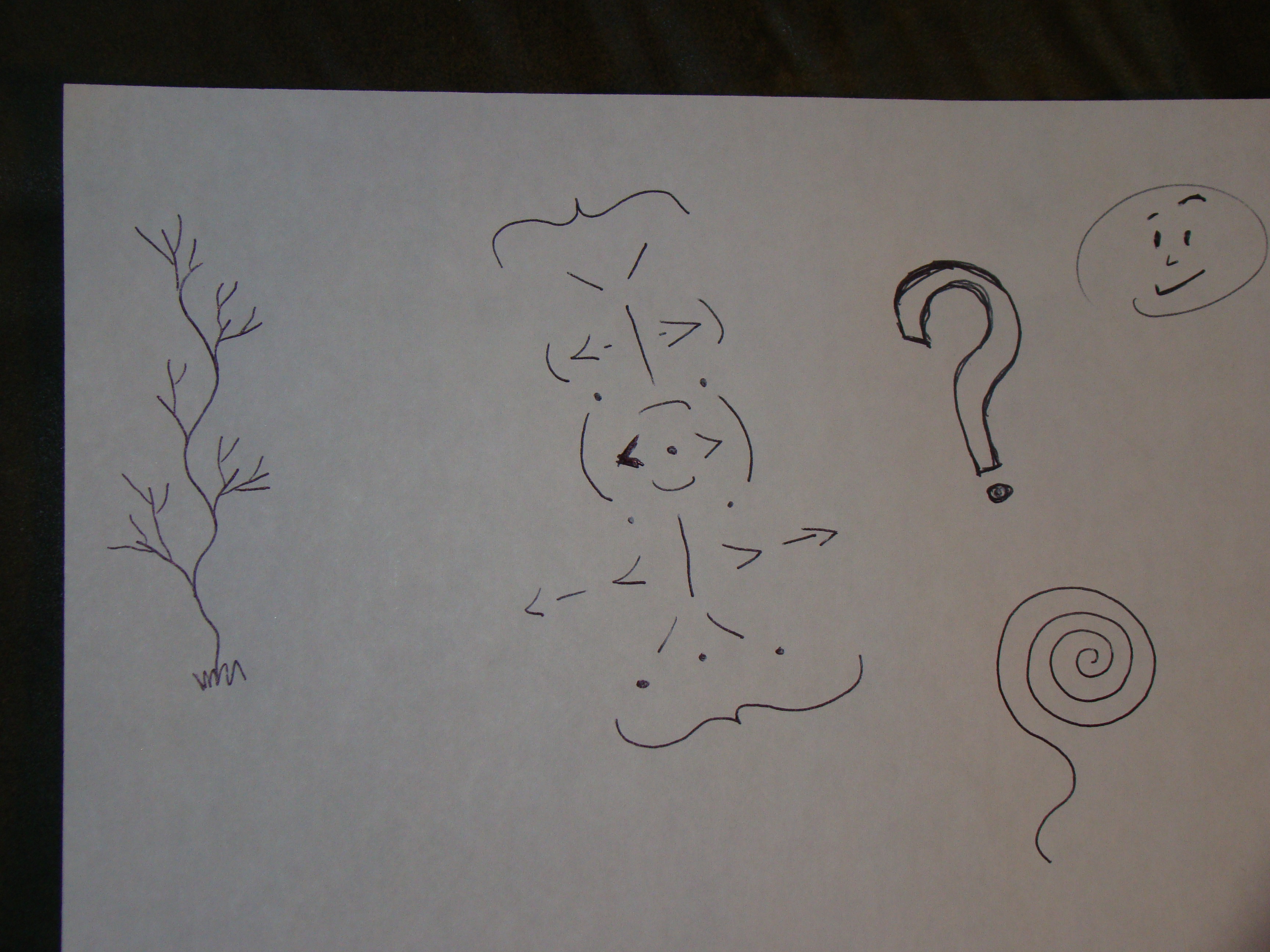
‘We Already Tried That’

I fear that these words have passed my lips at some point in the past and I imagine that they fell on the ears of the listener about the same way they fall on me when I hear them.  Shut down, denied, rejected.  Unintended enthusiasm killer.


I got together for brunch recently with some friends, we used to be co-workers, but now all work in other places.  This phrase came up and stuck with me because it is a common thing to hear in many offices.  New people mean new opportunities to examine old process and tasks in a new way.  New people could be new to the company or new to the team with prior experience at the company in a different role.


When I first heard ‘we already tried that’ in response to something that I said, I was rather crestfallen and rolled the rest of my comment back up, folded my hands and clammed up.  Now, I redouble my efforts to find a way to introduce the idea in a manner that will be palatable to the listener.  Or if I overhear someone else get shot down, I try to help them get an opening to complete their thought.


My thought isn’t so much that we should take action on the idea itself as much as it is about giving people the opportunity to speak up and participate in solutions.  Or the process for developing solutions.  Maybe we really did try exactly that and it didn’t work at that time, in that manner.  But that isn’t the point (plus this is a new time and maybe with a couple of tweaks the idea is valid again.)  Maybe it didn’t work the first time for some sub reason that would no longer affect the outcome.

Imagine if we hadn't allowed any new versions of Edison's inventions? (public domain image)

Imagine if we hadn’t allowed any new versions of Edison’s inventions? (public domain image)


The objective, purportedly, is to have engaged employees – ones who participate actively in creating solutions to the situations that invariably come up.  This phrase is high on the list of reasons why employees stop participating and just trudge along.  It is in my DNA to keep putting forth new suggestions, but this isn’t true for many people.  Who knows how hard someone had to screw up their courage to put forth an idea to be told ‘we already tried that’ before the whole idea was out of their mouth?


We already tried to shoot down ideas with ‘we already tried that’ and it failed miserably.


© 2014 BAReed Writing | Practical Business, All rights reserved

Trail of Dots

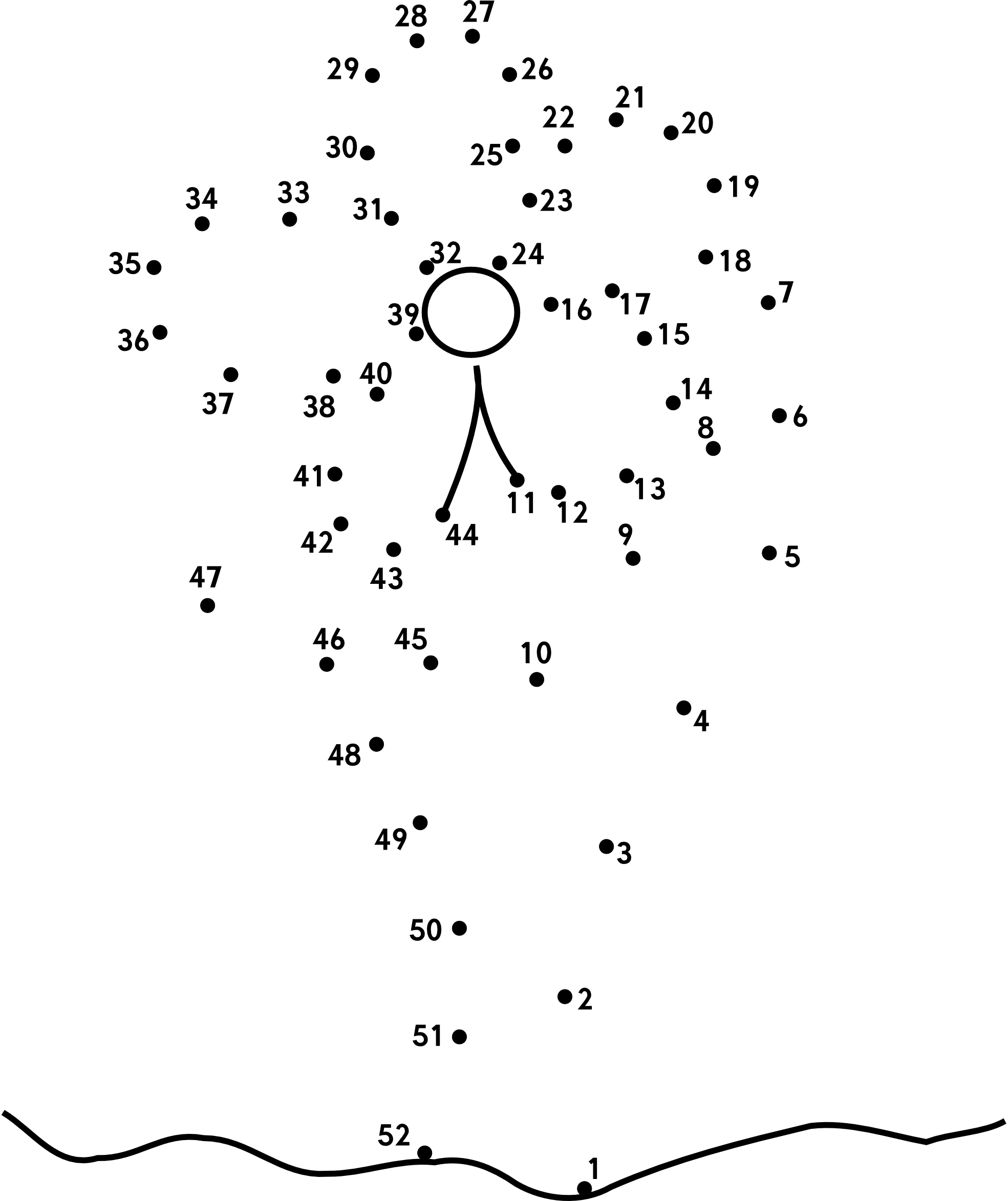
Remember those fun sheets that we would get in those early years at school?  Random numbered dots scattered on the page with the occasional squiggle or line or recognizable body part – and we would know what the picture represented after we connected the dots in numerical order.  I’m sitting here right now thinking that those exercises where just about the best training for work, and life, that we got in school.

public domain image

public domain image


This led to that, and sometimes you really had to search for that.  Not to mention if you accidentally got out of sequence it could be a slow and messy clean up to start again.  In the meantime you wouldn’t be able to tell what you had at all.  (If only tracking down things now resulted in a cute little picture that I could happily color.)


The one aspect of dependencies that was represented on the page – maintaining the right sequence – had to stand in for others such as waiting on other people or working within system or program limitations.  I suppose teachers were wise in keeping this one to themselves for a few more years.  We were still busy learning the get along with others and sharing part, no need to muddy that yet.


Now that I am thinking about how these Connect the Dots exercises were so much more important than they seemed at the time – I wonder about how one went about constructing them?  Obviously starting with the full picture, but the art, or science, was to determine the right points to keep so that the recipient couldn’t immediately guess the subject of the picture but would also not get confused.


Sometimes the designer made mistakes and left out parts or skipped a number and the puzzle couldn’t be completed as shown.  This left the child hanging, or gave the child the opportunity to use their own imagination.  Again, making this a great test for work and life – a low risk chance to practice what to do when instructions are wrong or incomplete for the task at hand.


Some days, by the end of the work day, my brain is only capable of the most rudimentary task.  Maybe I should go out and get myself a book of these Connect the Dots and see if that will help my brain unwind from the more complicated trail of dots in life.


© 2014 BAReed Writing | Practical Business, All rights reserved
A Highly Developed Sense of Duty

I came home from work last night with a blog post idea floating around in my head.  This isn’t it, I hope to retrieve it later and have it show up on this site at some point.  No, I walked in thinking I would just start in on the computer but the dishes called out, and a load of laundry too.  Once those things were no longer disturbing my sensibilities, I didn’t have it in me to write that other post.


This post is about the sense of duty that drove me to work on the chores first.  Is it a gene, a cluster of brain cells, or something else entirely?  Why do some people have this sense practically oozing out of their pores and others wouldn’t recognize duty if their existence depended upon it?  And then there are the majority of people who have just enough to keep them from scampering off to Tahiti and instead make a life which includes a considerable dose of responsibility.


I believe that I’ve written about this before.  And I will certainly write about it again.  Dad was big on fulfilling duty first.  His words and actions showed us daily.  I wish that I had more of this trait when it comes to keeping my house in good shape, but I have plenty of ways that I relentlessly apply my energy to duty first.

"Lets have faith that right makes might; and in that faith let us, to the end, dare to do our duty as we understand it."  ~ Abraham Lincoln (public domain image)

“Let’s have faith that right makes might; and in that faith let us, to the end, dare to do our duty as we understand it.”
~ Abraham Lincoln
(public domain image)


A sense of duty is a very helpful thing to develop and maintain – I am thankful to have it.  However, I have spent the last few years seeking to balance this duty with other important things too.  Time with people that mean something to me, opportunity to gain new experience, pleasant pastimes.


Now that duty has been met, I need to get my head back into the right frame for that other post.  First I will wish for you a nice balance of duty and leisure in your weekend.


© 2014 BAReed Writing | Practical Business, All rights reserved

The Sarcastic Muse

Writing. Information. Inspiration. Sarcasm guaranteed.

Stefanie O'Connell

Just another WordPress.com site

Retirement - Only the Beginning

Retirement Planning Beyond Financial

Voices In His Head

Recognized as Blog Of The Year! (unfortunately, it was given the year 1910, the start of the Great Depression)

O at the Edges

Musings on poetry, language, perception, numbers, food, and anything else that slips through the cracks.

BAReed Writing, Business Writing

Clear, professional writing is closer than you think.

Dancing Beastie

Seasonal living in a Scottish castle

eyeslikecarnivals.com

Clear, professional writing is closer than you think.

Blog to Work

Blogging your way to a job.

michelleshaeffer.com

Simplifying Business Chaos

Always The Write Time Blog

by CHRIS MADAY SCHMIDT

Art of Non-Conformity

Clear, professional writing is closer than you think.

xplorenorthshore

Smile! You’re at the best WordPress.com site ever

Medievalists.net

Clear, professional writing is closer than you think.

The Creative Penn

Clear, professional writing is closer than you think.

Gifts Of The Journey

The Fearless Pursuit Of A Life Worth Living

The rising tide

Through The Glass Darkly

an interconnected life...

Discovering the threads that connect us, one story at a time.

TED Blog

The TED Blog shares news about TED Talks and TED Conferences.

animatingyourlife

A great WordPress.com site

Second Star to the Right

and straight on 'til morning

CAHOOTS

Success is meant to be shared

Farmlet

Living cheaply and richly on an acre in Puna, Hawaii

J T Weaver

When you got nothing, you got nothing to lose. — Dylan.

Gen Y Girl

Twentysomething. Annoyed with corporate BS. Obsessed with Gen Y. Not bratty. Just opinionated.

Jenna Dee

....living with a following wind

Doublewhirler

iPhone vs Camera

Book Hub, Inc.

The Total Book Experience

The Write Project

looking for light in a weary world