Tag Archives: Problem solving

Asking the Wrong Thing of Someone

Is a person failing at a task when they simply do not have the right temperament to do the task?  (I’m not talking about skill here.)  Or did the person who set them to the task set them up to fail?  Granted in the all too frequent situation of job insecurity these days, many people stretch in one way or another because any job that brings in a paycheck is better than the alternative.  But we’ll set that aside too.


There are people who pick up rather easily on tasks, even someone complex ones, and others who will be great at the task but must be given time to learn it at what would seem to be a glacial pace to that fast learner, but is just right.  Both of these temperaments will excel at the task once the training is done – but if the more deliberate learner isn’t given the time to make the task his or her own they will probably fail.

public domain image

public domain image


Most people work better when they know their boundaries – my job starts here, covers this area, and ends here; anything outside that area belongs to someone else.  A person with a collaborative mindset will fit perfectly into a job with overlapping responsibilities, while a person who is best when working entirely independently will struggle.  A person who likes narrow boundaries will implode in a situation with nebulous boundaries – particularly if they are also cautious.


When I’m interviewing a candidate, I like to ask them what sort of student they are – not were, but are.  This will tell me a lot about their temperament.  Will they ask me to better define the parameters of the question – do I mean back when they were in school?  What do I mean by student?  Or will they dive in with a canned answer that they are up for anything and love to learn?  This isn’t a trick question on my part (I don’t like trick questions.)  No, I want to make sure that I won’t be asking the wrong thing of anyone.  I don’t like to be set up to fail, and I will make every effort not to do so to anyone else.


Failure is a part of life, and can be useful sometimes.  But we don’t need regular and unceasing doses of it with no end in sight.  Being in a job where you are asked to do something counter to your temperament regularly is quite wearing.


Have you been there, what was your solution?


© 2014 BAReed Writing | Practical Business, All rights reserved
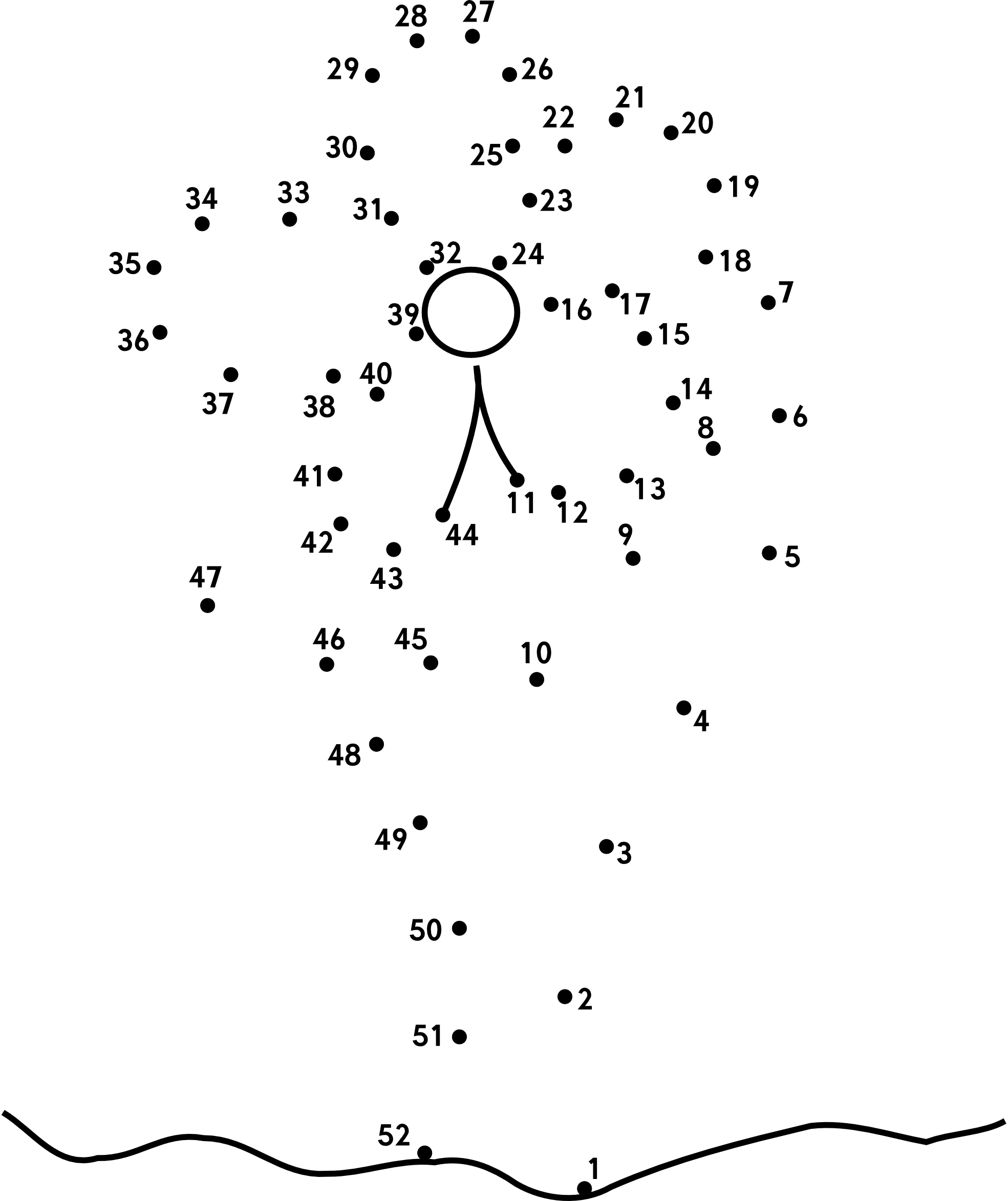
Trail of Dots

Remember those fun sheets that we would get in those early years at school?  Random numbered dots scattered on the page with the occasional squiggle or line or recognizable body part – and we would know what the picture represented after we connected the dots in numerical order.  I’m sitting here right now thinking that those exercises where just about the best training for work, and life, that we got in school.

public domain image

public domain image


This led to that, and sometimes you really had to search for that.  Not to mention if you accidentally got out of sequence it could be a slow and messy clean up to start again.  In the meantime you wouldn’t be able to tell what you had at all.  (If only tracking down things now resulted in a cute little picture that I could happily color.)


The one aspect of dependencies that was represented on the page – maintaining the right sequence – had to stand in for others such as waiting on other people or working within system or program limitations.  I suppose teachers were wise in keeping this one to themselves for a few more years.  We were still busy learning the get along with others and sharing part, no need to muddy that yet.


Now that I am thinking about how these Connect the Dots exercises were so much more important than they seemed at the time – I wonder about how one went about constructing them?  Obviously starting with the full picture, but the art, or science, was to determine the right points to keep so that the recipient couldn’t immediately guess the subject of the picture but would also not get confused.


Sometimes the designer made mistakes and left out parts or skipped a number and the puzzle couldn’t be completed as shown.  This left the child hanging, or gave the child the opportunity to use their own imagination.  Again, making this a great test for work and life – a low risk chance to practice what to do when instructions are wrong or incomplete for the task at hand.


Some days, by the end of the work day, my brain is only capable of the most rudimentary task.  Maybe I should go out and get myself a book of these Connect the Dots and see if that will help my brain unwind from the more complicated trail of dots in life.


© 2014 BAReed Writing | Practical Business, All rights reserved
Cultivate Your Inner Two-Year-Old

I don’t think that this post will interest people who like to have a steady, few task oriented occupation.  I was thinking the other day that 2 year olds have it right to be so inquisitive.  The world is more interesting when you want to learn more about the things around you – how they work, why they are the way that they are.


Going farther back, I had a revelation about colic as I tried to soothe my sons when they were babies.  And suddenly I saw the world as they saw it and while my realization didn’t ease my own exhaustion and wish that they would just stop crying, it did give me empathy to continue my quest to bring them peace.  The revelation was just this – there is a tremendous amount of stimulation around us every waking moment of every day, lights, sounds, movement, touch and our senses are bombarded, we have learned how to process it all to the point that we are nearly unaware of how much stimulation is around.  But to a baby it is all new and disorienting.


By the age of 2, we can filter through the familiar stimuli and get drawn to anything new that tickles our senses.  We explore this new thing with delight and share this pleasure with anyone who might be around.  Who can’t help but be charmed?

DSC03720

Somewhere along the line, the curiosity and delight in new things dries up for many of us.  New things might start to mean more to do, or harder to understand, or any number of unpleasant associations.  Sadly.


I won’t deny that much of this reasoning can be true, but we miss out on new things that could be good by this wholesale shutting down.  I was thinking the other day about one of my least favorite responses to the cheerful good morning that I offer around the office, which is ‘what’s good about it?’.  I’ve gone to the effort to fire up my cheer and get a snarl in return?


Well, here is my hard-won answer to that question – the possibility.  I’m breezing through my own apprehensions and morning grumpy to cultivate my inner two-year-old.  There is possibility for something interesting, potentially delightful just ahead.  And I don’t want to miss it because I filtered it out.  If I channel this inner curiosity, I might just make more opportunities for myself at work by expanding my knowledge of the how and why of my work place.  What do you think?


© 2014 BAReed Writing | Practical Business, All rights reserved

Short Term Planning

public domain image

public domain image

I know this is the time of year to hatch grand ideas, named Resolutions, not a time to be thinking small.  Well, the fellow who normally cuts my hair was stricken with pneumonia right before Christmas and my haircut appointment and while I do hope that he is ok, this leaves me with a shaggy dilemma.


I can’t remember the last time that I felt truly pleased about my hair – the style, the color – and I am the kind of person who only pays marginal attention to any sort of style.  I do understand that appearance it important because it is part of people’s perception of a person.  And I can appreciate when someone else looks well put together, I just have a hard time figuring out how they managed the effect.


Anyway, my need to resolve my overgrown locks has me thinking about short term planning at this almost New Year stage.  It often seems as if we just do whatever is in front of us.  Get it done, move to the next thing, get it done, move to the next thing.  Periodically check the list, if you keep one, to make sure things aren’t missed.


My sister, brother, sister-in-law and I went to the grocery store the weekend before Christmas.  Life has been a bit hectic so while we had made plans to be together for the holiday, those plans hadn’t gotten specific enough to cover little things like food.  We put together a menu plan before we got in the car and only my sister thought to write it all down.  She had a handful of lists, actually, including general things that she needed for her household since she was hosting.


It was fun to go to the store together, despite the number of other shoppers.  It was out of the norm, and I couldn’t help but remember back on our childhood shopping trips plus other shared shopping experiences over the years that occurred during other family gathering times.  But it was haphazard with different members of our team wandering off in search of this or that and only my sister keeping track of the items that had made it onto our list.


We had quite tasty meals, with shared cooking responsibilities and shared clean up, too.  Perhaps it would have benefitted from more rigorous pre-planning – it certainly helped that we have had enough previous family gatherings that parts could be done without much discussion.  It would probably have been rather a disaster for a group of unfamiliar people.


I’m going to keep thinking about short term planning while I find someplace to get a haircut.  I’d love to know your thoughts on planning – short, long, or resolution type.


© 2013 BAReed Writing | Practical Business, All rights reserved

That Snap into Place Feeling

Legos go together with a satisfying snap.  Lids on containers of all shapes and sizes are snuggly in place when they snap.  Locks are set when we here that snick, and doors shut tight with a click.  Now we know that at least that particular item is secure.  There is plenty of unknown only feet away, so giving ourselves any kind of assurance of safety is paramount.

DSC03637

If only the right decision would offer the same satisfying snap when we land upon it.  Particularly with the big scary decisions that we sometimes have to make with little information or time to contemplate.  Have that surgery, go for the short sale or ride the foreclosure, change careers or stay the course, time to put dad in the nursing home?  All of the options have down sides and leave us feeling slightly ill – no snap involved.

Every once in a great while a decision will come with an immediate snap, reinforcement that it was just the right decision for us for that moment, for that situation.  Because if we take the same option the next time, it doesn’t always turn out so well.  What the???  Crap, I thought that was The right decision – as in my go-to from here on out.  The moment was no longer right, some alignment was different and no snap resulted.

The initial evaluations, weighing of options are tough enough.  Did we apply the right parameters, ask the right questions to get a clear understanding?  But then the re-evaluation starts with the smallest opening of doubt.  ‘I didn’t think about this, consider that point, take into account for this other…’  If only I’d gotten that snap, or known it was coming, then I would have kept looking for a better option.

I always thought that part of being an adult would be a strong ability to make solid decisions.  Ha.  The adults around me seemed to know what they were doing, to be making decisions with snap in them because they didn’t let me see the machinations and ruminations that went into the decisions not because they had a perfect sense on how to make good decisions.

I’m going to keep searching for a snappy decision making method, in the meantime I’m going to snap together some Legos.

© 2013 BAReed Writing | Practical Business, All rights reserved
Revisiting a Question

We back away, brush our hands off and think, ‘whew, that’s done now on to the next thing’ – problem solved, to-do checked off the list.  File it away.  Next.  But what if it isn’t?  What if in a few weeks, or months, or even years something happens to make us have to go through it all again; possibly even come to a different conclusion?


The medical community has revamped the protocols for cholesterol and statin use and that seems to have knocked people for a loop.  That question was resolved, we all thought anyway.  But life is cyclical, we learn new things on some other topic and the ripple effect can alter the decisions that seemed set in stone just a short while before.


“That is the one thing that I’ve learned, that it is possible to really understand things at certain points, and not be able to retain them, to be in utter confusion just a short while later.  I used to think that once you really knew a thing, its truth would shine forever.”

~ Lucy Grealy

Capture

It seems a bit like Lucy and I aren’t coming at this issue in quite the same way, but I think that we really are.  Where she mentions retain, it might be about keeping the knowledge fresh in our own memory, but it could also mean keeping it solid in light of new information or experiences.  Almost anything that we think we know is based almost entirely upon the context in which we know it.  If the context changes, our understanding of the thing can be thrown into confusion.


It might seem as though we are moving backward in revisiting a question, but if we are looking at it with fresh eyes and understanding then it is actually a good thing.  When the elements that went into the original answer have changed, then the nature of the question and the basis of the solution might be wholly different.


It isn’t a retread at all then, but a deepening and broadening of understanding.


© 2013 BAReed Writing | Practical Business, All rights reserved
Wanted to do This, but That Got in the Way

Have you ever just been eager to start on something but been prevented because something that you need to do what you want requires attention before you can get into your desired task?  So frustrating!


For the last month plus I have been finding more often than not that when I sit down to write – blog post idea percolating away in my head – my Microsoft Word must be reinstalled.  Grrr.  Now I must deal with this technical issue and risk losing the essence of my post idea unless I start to write it out long hand.  My thoughts come faster than I can sketch out this way, that is why I love composing on the computer.


There are plenty of other examples; getting ready to bake something and finding I am short on a key ingredient, wrapping a package and the tape is missing in action, nearing the end of a project but still have an open question due from someone else.  So close, and yet…  Ticking this task off the to-do list will just have to wait.  Darn it.

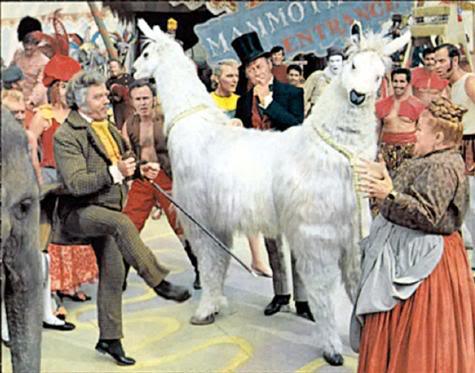
Pushme-Pullyou from the original Dr Doolittle movie.  (my appreciation has lasted a lifetime)

Pushme-Pullyou from the original Dr Doolittle movie. (my appreciation has lasted a lifetime)


A few years ago I just couldn’t quite motivate myself to get in the car and go off on vacation.  A vacation that included my cousin’s wedding.  I’m not sure what prompted my malaise, but I waited until the morning of departure to pack and then did so in a desultory fashion, all the while fighting with the idea that I just wouldn’t go.  When I finally got myself on the road, it was only perhaps an hour into the drive when I started to think of toiletries and other items that I had forgotten to pack and by the time I stopped for a break I had almost a dozen things listed.


It wasn’t anything that I couldn’t replace at the nearest drug store – the worst was my favorite lipstick and the drug store where I stopped didn’t have an equivalent color.  And it was more my own head that got in the way in this instance and created external obstacles, but I still had to push through it.  I did end up having a lovely time, and a much needed break from work.


Hmm, my frustration with Word is what prompted this post and I’ve taken it somewhere I didn’t intend.  I guess my point then is that it is good to plan, but also to push through the unplanned or frustrating parts.


© 2013 BAReed Writing | Practical Business, All rights reserved

Not an Optimal Time to Think

If we were to be asked, we would say that we should always think about what’s going on, what we are doing because it cuts down on mistakes.  And then there is reality, often a far cry from what is best practice.  Well, to err is human.


Ask a person how something went wrong – a car accident, a work mistake, hurt feelings after a callous comment – and the answer most likely boils down to ‘I didn’t think’.  Too much was going on in that person’s mind at that moment and the most immediate task became the casualty of the overtaxed thinking process.

thinking

This is why we practice things, why we drill something over and over, so that the activity creates a sort of groove in our brain and that memory kicks in every time we take up that activity.  (Think of the times that you have been tired and pulled into your driveway and realized you don’t remember the trip at all.)  All that practice makes it more possible that we’ll do the right thing even if we might be fighting panic or illness or something else entirely.  But it isn’t foolproof.


I have tacked up bits and scraps of paper near my writing desk (which I rarely use now that I have a laptop…), these scraps hold advice on writing from past well-known writers.  One is apropos for today, because it can be applied to thinking as well as writing.  It is Herman Melville who said it, but it comes to us through Sarah Paretsky; a writer must be in a ‘silent grass growing mood’ in order to write.


Think of all the times that you know a thing but it just won’t crystalize in that moment.  Most likely because that moment isn’t an optimal time to think – there is noise, distraction, pressure coming from somewhere and clouding your thought process.


I equate this to my math difficulties.  My brain shuts down on any math when I am in a group.  This goes back to a horrid game that was suddenly introduced to me on a steel gray February morning in 2nd or 3rd grade.  I had just moved to the school, so my classmates had been practicing this game for months.  To this day my brain simply says no if I have to do math when there is any attention on me.


I needed a silent grass growing mood to get a firm grasp on math concepts and then practice to gain speed before I played that stupid game.  Even understanding the root of my math anxiety, it is rarely an optimal time for me to think in mathematical concepts when I’m in public.


© 2013 BAReed Writing | Practical Business, All rights reserved
Intellectual Calisthenics

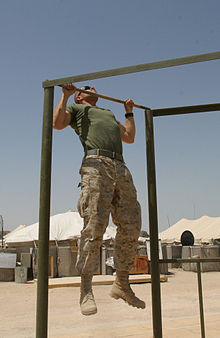
Some weeks just seem to be overfull of mental obstacle courses – over this wall, through that muck, around the barrier, dodge the danger zone, swim this channel, start this next obstacle course.  And again.  Oh my.

photo credit: Wikipedia, Marine Pull ups

photo credit: Wikipedia, Marine Pull ups

The brainy neuroscience folks like to tell us that this is good for our minds, keeps us sharp.  Hmm, I feel more like I have a puddle in my head after a couple of days like this and can’t be trusted to decide what’s for dinner.  I don’t really care in those moments that I might be lowering my risk of dementia.  In fact I tend to feel slightly demented after too many days of intellectual calisthenics.

One good puzzle here and there and I agree, my brain is the better for the exercise.  For instance in the calm quiet as I write this, it has been a good challenge to remember how to spell calisthenics.  (My fingers don’t want to spell it correctly and resent that I keep using the word.)  It’s when there is a relentless string of exercises that things get wearing.  Like I’m in my own extended, real life version of a disaster movie.  How much more can be piled on?

(That last question is rhetorical, I don’t really want to find out.  I thought that I better put that point out there, just in case some force wants to explore the answer.)

Well, the sun is shining and that is a November feat not to be ignored, so perhaps I should take a break from intellectual exercise and go get some of the physical kind.  The leaves need to be raked, so I’ll think about that as I take a walk and soak up some sun rays.

How have you exercised your own mind lately?  And how do you feel about it?

© 2013 BAReed Writing | Practical Business, All rights reserved

Fair and Equitable

photo credit: Wikipedia

photo credit: Wikipedia

I don’t much believe in astrology except that I am very interested in balance and I was born under the sign of Libra – which is represented as a scale.  Coincidence, perhaps.  Fair and equitable are worthy objectives when searching for a solution to anything within a group.  But blasted hard to achieve sometimes.

Mainly because these are very subjective words – how a person defines fair is very much dependent upon factors in their life that have little or no bearing upon the current situation.  Or perhaps upon the definition of the word fair in the dictionary.  I can’t control this, and can only account for it minimally in crafting any solution.

Does this mean that I should not attempt to be fair and equitable?  Absolutely not.  Even if something is difficult to achieve, it is often a worthy goal.  Fair and equitable is always a worthy goal.  (And not worth tracking how often you achieve – but perhaps worthy tracking what didn’t work with a particular group and why…)

Like right at this moment is it fair that the dog is standing on the outside of the sliding doors looking beseechingly at me, wanting to come in, while I type?  Yes, it is – I don’t want to lose my train of thought and it isn’t overly cold, there is no rain and most likely another dog out on a walk will be by shortly to distract her.  That’s my call, you may make a different determination of fair in this example.

Generally the best thing that a person can do is to decide what rules, based on their own experiences plus current circumstances, constitute fair and equitable.   If you don’t know what these look like for yourself, how can you possibly begin to apply them in larger settings such as within a group?  Yes this takes thought and effort.  Yes it can be uncomfortable.  But you will have a stronger position if you put the effort into clearly defining your own position.

Then you can build on your own general definition to determine what is fair and equitable within the context of different situations and groups.  You can take into account the make-up of the group itself, or the specifics of the situation.  Are there extenuating circumstances?  Is this on-going or one-time?

I’m going to go let the dog in now.  What does fair and equitable mean to you?

© 2013 BAReed Writing | Practical Business, All rights reserved

The Sarcastic Muse

Writing. Information. Inspiration. Sarcasm guaranteed.

Stefanie O'Connell

Just another WordPress.com site

Retirement - Only the Beginning

Retirement Planning Beyond Financial

Voices In His Head

Recognized as Blog Of The Year! (unfortunately, it was given the year 1910, the start of the Great Depression)

O at the Edges

Musings on poetry, language, perception, numbers, food, and anything else that slips through the cracks.

BAReed Writing, Business Writing

Clear, professional writing is closer than you think.

Dancing Beastie

Seasonal living in a Scottish castle

eyeslikecarnivals.com

Clear, professional writing is closer than you think.

Blog to Work

Blogging your way to a job.

michelleshaeffer.com

Simplifying Business Chaos

Always The Write Time Blog

by CHRIS MADAY SCHMIDT

Art of Non-Conformity

Clear, professional writing is closer than you think.

xplorenorthshore

Smile! You’re at the best WordPress.com site ever

Medievalists.net

Clear, professional writing is closer than you think.

The Creative Penn

Clear, professional writing is closer than you think.

Gifts Of The Journey

The Fearless Pursuit Of A Life Worth Living

The rising tide

Through The Glass Darkly

an interconnected life...

Discovering the threads that connect us, one story at a time.

TED Blog

The TED Blog shares news about TED Talks and TED Conferences.

animatingyourlife

A great WordPress.com site

Second Star to the Right

and straight on 'til morning

CAHOOTS

Success is meant to be shared

Farmlet

Living cheaply and richly on an acre in Puna, Hawaii

J T Weaver

When you got nothing, you got nothing to lose. — Dylan.

Gen Y Girl

Twentysomething. Annoyed with corporate BS. Obsessed with Gen Y. Not bratty. Just opinionated.

Jenna Dee

....living with a following wind

Doublewhirler

iPhone vs Camera

Book Hub, Inc.

The Total Book Experience

The Write Project

looking for light in a weary world