Tag Archives: Purpose

Fair and Equitable

photo credit: Wikipedia

photo credit: Wikipedia

I don’t much believe in astrology except that I am very interested in balance and I was born under the sign of Libra – which is represented as a scale.  Coincidence, perhaps.  Fair and equitable are worthy objectives when searching for a solution to anything within a group.  But blasted hard to achieve sometimes.

Mainly because these are very subjective words – how a person defines fair is very much dependent upon factors in their life that have little or no bearing upon the current situation.  Or perhaps upon the definition of the word fair in the dictionary.  I can’t control this, and can only account for it minimally in crafting any solution.

Does this mean that I should not attempt to be fair and equitable?  Absolutely not.  Even if something is difficult to achieve, it is often a worthy goal.  Fair and equitable is always a worthy goal.  (And not worth tracking how often you achieve – but perhaps worthy tracking what didn’t work with a particular group and why…)

Like right at this moment is it fair that the dog is standing on the outside of the sliding doors looking beseechingly at me, wanting to come in, while I type?  Yes, it is – I don’t want to lose my train of thought and it isn’t overly cold, there is no rain and most likely another dog out on a walk will be by shortly to distract her.  That’s my call, you may make a different determination of fair in this example.

Generally the best thing that a person can do is to decide what rules, based on their own experiences plus current circumstances, constitute fair and equitable.   If you don’t know what these look like for yourself, how can you possibly begin to apply them in larger settings such as within a group?  Yes this takes thought and effort.  Yes it can be uncomfortable.  But you will have a stronger position if you put the effort into clearly defining your own position.

Then you can build on your own general definition to determine what is fair and equitable within the context of different situations and groups.  You can take into account the make-up of the group itself, or the specifics of the situation.  Are there extenuating circumstances?  Is this on-going or one-time?

I’m going to go let the dog in now.  What does fair and equitable mean to you?

© 2013 BAReed Writing | Practical Business, All rights reserved

I Have a Dumb Phone

We had dinner the other night, several friends and I, and in comparing stories it came up – as it often does – that I am one of the last people in the US that doesn’t have a smart phone.  Oh wait, it needs the quotes – ‘smart’ phone.  You see, I just don’t see how people justify the extra cost.  I don’t see why these phones are called ‘smart’.


I had a smart phone for work.  First a Blackberry which I did come to rely upon to keep me up to the minute on office goings-on when I was away.  And then an IPhone which I never cared for – the touch screen just isn’t for me.  For personal use I have stuck with my little old dumb phone.  Not quite the old brick phones – but mundane enough that I have been told on more than one occasion by the young people who work with my carrier that they never carried that model.  I then quietly point out their logo on the front of my phone.

How do you like my low tech solution to cover up manufacturer and carrier?

How do you like my low tech solution to cover up manufacturer and carrier?


Back to the dinner conversation.  It was suggested that I write a blog post comparing the smart and dumb phones.  Hmmm, I thought.  No, I’ll start the post and then see if any readers would like to finish it.


So here it is, your chance to tell me one – significant – reason why it is a better idea to have a smart phone.  Why I really MUST upgrade immediately, what I am missing out on.  How your phone has made your life easier, more something than it could be without that phone.  And the, in my opinion, oversized monthly bill that comes along with that phone.  Justify that chunk of change for me, please.


Keep in mind that I am not even teetering on the brink of getting a new phone and been considered a lost cause on this topic by many.  But I promise to read any responses with a most open mind.  (Which doesn’t mean that I might not be compelled to ask follow up or clarifying questions.)


© 2013 BAReed Writing | Practical Business, All rights reserved
Accumulating Small Triumphs

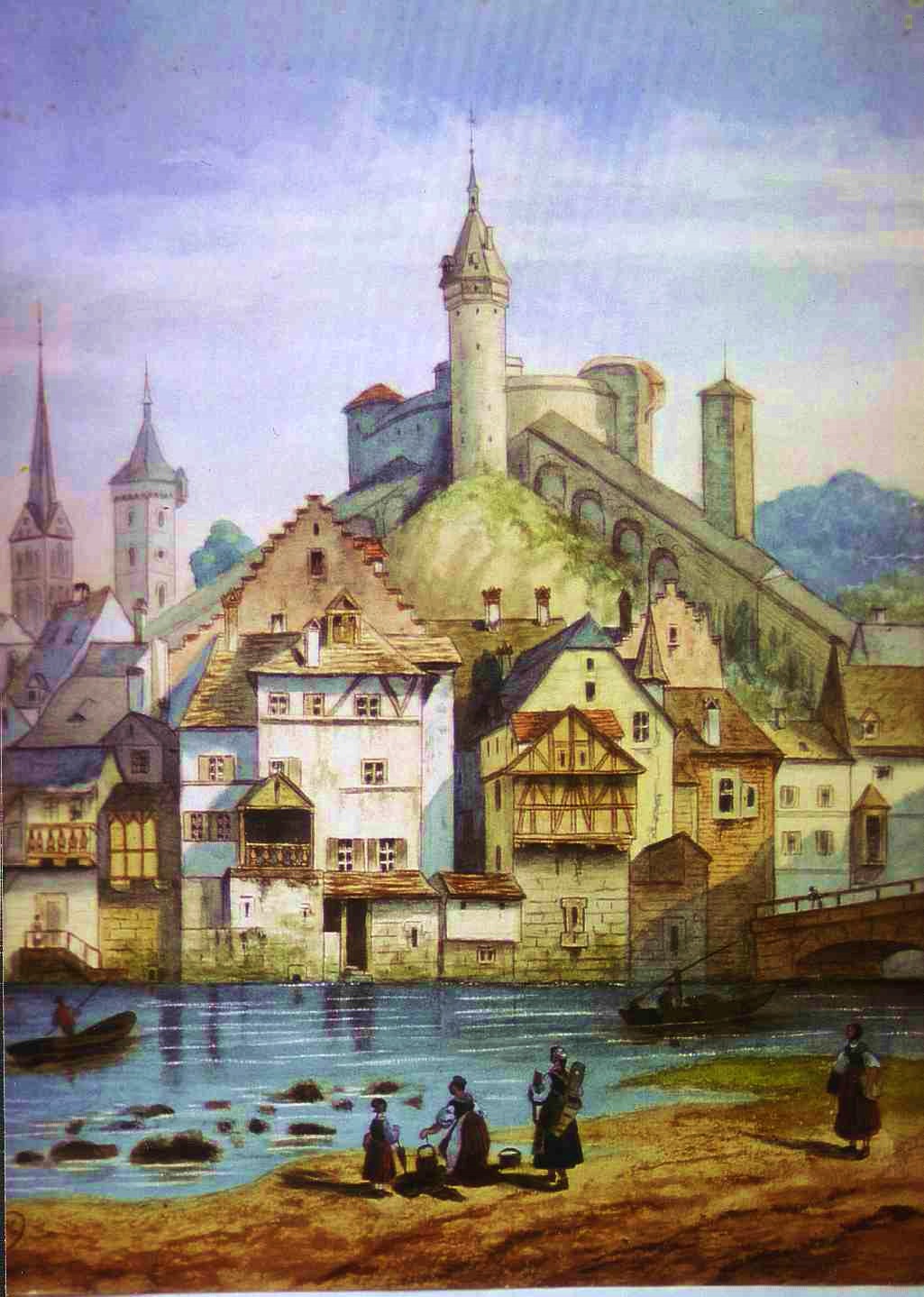
Big wins are fabulous, splashy feel good moments, but give me a succession of small wins any week and I’ll take that option every time.  Don’t get me wrong, I am not averse to big wins – indeed, bring one on, I could use it.  The thing is that the excitement and joy fade away into the everyday and then you are left with a nice photo.


We like to see our lives as a progression forward and toward something better.  The big wins then should give us a jump to a higher plain where we will then stay and continue to progress upward from that point.  But the truth is usually that the big win is a spike and then we come back to where we were previously and continue our progression after the interruption.


I haven’t even gotten into the other side of things, those difficulties – both large and small – that impede this progress.  I’ve mentioned before that over my life I have tended more toward the melancholy so these difficulties always loomed larger than any triumph in my perception.  Except in these last few years.  The difficulties are still there but I have consciously changed my perception.  (As I began to write this post in my head, my computer refused to start properly on the first try and I had to force a shut down all the while afraid that I would lose details of the idea with the delay.)


Look at what people accomplished without all of our modern machinery! 1875 August Menken photo credit: Wikipedia commons

Look at what people accomplished without all of our modern machinery!
1875 August Menken
photo credit: Wikipedia commons

If triumphs and difficulties left some sort of mark, sort of like the graphs in black and red that show earnings up or down of the center line, as we look back objectively at our lives these would probably be pretty even.  But in perception, I have found that if I make an effort to be aware of the small triumphs and give a moment of thanks then everything gets colored differently – and better.


We had many difficulties and challenges in the office last week but we ended on a small triumph which made it all worthwhile.


© 2013 BAReed Writing | Practical Business, All rights reserved
Creating Small Successes on LinkedIn

We think of success in these very narrow terms, specific to an end goal that usually involves improved finances as a component.  Success in this case is an ongoing strengthening of position as opposed to an end goal.  Success is also gaining better understanding of a system or process, bringing us closer to a goal and not just arrival at an end.  A broader and deeper definition of success enriches our ability to achieve meaningful success.

profile-plea

I am not an early adopter of much of anything, including social media.  LinkedIn was the first social media site that I joined, about 5 years ago, at the invitation of a business contact that I respect.  I created a basic profile and left it to its own devices; accepting invitations to connect from business contacts who found me and occasionally seeking out contacts.  I did no research into the power or potential of this platform.


Then I decided to get my profile to that 100% distinction (LinkedIn is smart, expecting to hook competitive spirit with this feature); and promptly returned to benign neglect, still not making an effort to understand the intent or possibility of the site.


When I found myself on the hunt for a job, I turned to LinkedIn as a resource.  I had incentive to figure out what this LinkedIn could do for me.  It was recently pointed out to me that most working people have very basic profiles and only unemployed people have robust profiles.  Perhaps, up to a point.  The professionals who have clued into the power and potential have taken the time to either hire someone to write a stellar profile or have sat and spent time researching and clicking around within all of the features.


It seemed to me that the LinkedIn Groups feature would be an important part of this search.  I had joined a couple of groups during my early days on the site and received the weekly update emails.  I ignored the emails and did not make any effort to understand the how and why of these groups that I had joined because someone had said it was a good idea.  (Lemming behavior, I admit it.)


I moved into group participation in the same way that most people enter a pool – slow acclimatization starting with a foot or a toe.  I belong to about 15 groups, some industry specific, some directed to my profession, some for job seekers, and a handful of regional and local groups.  I found that I would get bigger bang for my buck in the smaller, more focused groups, until I had built up enough activity to have impact in larger groups.


I have made comments, always aware that my activity is traceable and visible to anyone checking me out like recruiters or potential employers, on group discussions where I felt that I had something to add to the discussion.  I have also started discussions, both using someone else’s outside content and also posing my own original questions.


This was a good exercise and then one day I decided to take it to the next level.  I had participated in a discussion where someone I saw as an expert (and a person it would be good to meet) had made insightful comments and I reached out to him using the reply privately option.  He responded favorably, I read his profile and took his invitation to connect as a challenge.  Once he accepted, I realized that this was a whole new avenue to connect with people that I would like to have as contacts.  I now have a good size showing in my ‘met through LinkedIn’ tagging of my contacts.


I count this as a success and know that at some point I may use this group of people to leverage mutually beneficial future activities, whatever they may be.  I recommend to all that there is real value in learning LinkedIn and taking advantages of this platform.


© 2013 BAReed Writing | Practical Business, All rights reserved

Whose Job is it Anyway?

The result of the problem (incident, challenge, situation, happening, occurrence, negative event, etc.) lands splat in the middle of the team.  Does everyone stare at it?  Or perhaps everyone immediately finds busy work somewhere else?  Maybe a couple of people circle in closer for a look at least until a supervisor moves in at which point everyone fades back?

Capture

The supervisor picks it up and starts to ask questions – what is this?  Who knows something?  Do the hands start to form into pointers, poking this way or that?  If you get caught too close to the problem when the supervisor moves in, you become ‘it’ and that isn’t a desired position.


But why not?  Turn things on their ear, at review time, and almost everyone on the team is likely to put that they are a ‘go-to’ person for the department on their review somewhere.  When I read that as a manager, I immediately start to sift through my memory to see where they stood for those unclaimed problems.  At what point did they jump in?  How proactive were they with follow up and resolution?  Did they know the point at which it should be escalated?  Did they bring in the appropriate people from other departments to address it thoroughly?  Did they solve the underlying problem to prevent a repeat incident?


I think some people might be more willing to get in there and claim a problem to solve if they realized that it is like being a mini project manager.  You don’t have to do all the work, you must move the project from problem to resolution.  This doesn’t mean all by your lonesome.  You can bounce ideas off of co-workers, your manager.  You can enlist the aid of the appropriate people in other departments.  This becomes a chance to grow.


What happens to unclaimed problems at your office?


© 2013 BAReed Writing | Practical Business, All rights reserved

Lessons Last Week Lined Up to Reinforce

Socrates & Plato are still teaching us.  (photo credit: Wikipedia)

Socrates & Plato are still teaching us. (photo credit: Wikipedia)

We pack our early years with schooling and then often let our learning muscles get a little out of shape.  (And then you have to learn PowerPoint, uh-oh.)  Life has a tendency to provide us with plenty of opportunities that reinforce lessons we have previously learned, if we are paying attention.  I had two chances last week, that I noticed.

I like the idea of mindfulness, but it just isn’t possible to practice 24/7 – if you have found a way, please share.  I probably missed a few things that I saw as mundane at the time and not something with more substance.  And I am usually in the mindset to look for depth, patterns and opportunity.  Do you remember to look beyond, or deeper into the immediate task sometimes?

An important role for a leader is to help people recognize their own abilities to resolve situations and to provide tools and space to practice these skills.  I’m deep in learning mode right now, there are many things that I don’t know in detail.  My team knows the details and it is my responsibility to make sure that they have what they need to complete the tasks and keep things moving.  My responsibility is to offer alternatives to keep things moving, and encourage.

Being prepared means many things – practicing, familiarizing, and centering.  I had a chance to do a speech for Toastmasters in an unfamiliar space.  I had the speech itself cold (although I hadn’t practiced some changes well enough and left them out) but I didn’t take an opportunity to go stand up at the front and familiarize myself with the space.

I know better, we spent plenty of time on blocking (figuring out where to stand and move in a scene) in my theater days.  Blocking will change based on the space that you are working in, so in theater we block in the practice space and re-block once we move to the stage.  If we do a good job, we won’t look awkward when we have an audience.  I probably had some awkward moments in my speech that could have been avoided if I had just gone up to the front of the hall when I got there.

Then there is centering – taking that moment to get right in the head.  Don’t do it at your peril.  Do it half-way and pay the consequences.  This is particularly a lesson that many of us have to relearn, sometimes daily.   I did it half-way.

It was a mistake, that impression that many of us got in school that lessons only had to be repeated if we weren’t smart enough.  Repeat lessons come along to give us an opportunity to refocus, that’s all.  A chance to improve.

© 2013 BAReed Writing | Practical Business, All rights reserved

The Details of the Day

(I recently enjoyed reading The Remains of the Day by Kazuo Ishiguro, so a nod to his title that I’ve played off of here.)


It is the details of a thing that either serve us well and move our plans forward, or that trip us up.  Back in school, if we answered that the civil war happened sometime in the 1800s we most likely were marked wrong on a test and asked for more detail if it was a class discussion.  While vaguely correct, the level of detail needed for accuracy is missing in this broad answer.


Impressions stick with me – the patterns of a process, reactions of a person or a group – but not details.  When I need to remember something, I search in my memory for any placeholders such as what day it was, who might have been there, where I was located.  If I can recreate the scene to a moderate level of detail, I have a better chance of retrieving some specifics.  I rely upon notes to dig deeper and bring back greater, finer details.

Claude Monet's 1882: The Church at Varengaville, Grey Weather, photo credit  Wikipaintings

Claude Monet’s 1882: The Church at Varengaville, Grey Weather, photo credit Wikipaintings


In my family, I am the de facto keeper of memorabilia – all the physical prompts that open the flood gates of ‘remember when’; the pictures and trinkets of our past.  These are talisman to bring up those impressions of large, small, important, and mundane activities and moments of life.  What we each produce of this memory and then share can become a more complete recreation of the original since we each have different sensibilities which trigger what and how we will remember something.


In business, I have honed the note taking that I learned in school (and diverge from my regular method at my peril) to develop a pretty good practice which records the right level of detail for retention and reference later.  The notes help me to get from that overall impression level of detail into more complete who, what, where, when, why particulars.  When I am really on my game, I sift back through the notes as soon as possible to develop the next level of associations – what goes with what.


I have a habit of writing call notes that has served me very well in personal as well as professional business.  I learned this habit the hard way when faced with retractions or changes to agreements and could only go back to my own impressions of the previous interactions.  Now when I can say that I called on this day and spoke to this person and was told this specific thing would happen, I am more likely to get the result that I expect.


Impressions of events are fine when sitting around at a family gathering and bringing out the old pictures to indulge in ‘remember when’.  But we all need to have methods of retaining finer details when it comes to moving our plans forward and keeping them on track.


© 2013 BAReed Writing | Practical Business, All rights reserved

Forward, Yes, Looking Over a Shoulder

Life moves us ever forward.  We have one day after another – some are good and some not so much.  There are people who are good at looking forward, planning and making sure that this progression of days add up to a larger something; and on the other side of the spectrum there are people for whom every day is a surprise.  Then there are all of the rest of us in between.

forwardBut which way are we looking most often?  Forward, back, all around?  Like driving, we know that we should shift our focus between all of these views, but depending on our personality and experience we tend to settle into one habitual viewpoint.  We lose range of motion after some time of this single default viewpoint.

The best mix of forward, back and all around gives us the richest context.  We need that backward historical viewpoint to provide some recognition to new things.  (This is similar to that old thing in certain ways.)  Adding in the forward helps the new thing to reveal previously unexperienced, and possibly beneficial, perspectives and knowledge.  All around provides balance and depth – we can better decide what weight to apply to everything.

But we need something to push us off our preferred viewpoint, most likely.  Do you regularly use the past to decide what to do today?  Do you look forward to new experiences?  How often do you switch it up?  I liken it to changing lanes when driving – even though I know that I should turn my head as well as using my mirrors I find that I can slip into a bad habit of just using my mirrors and perhaps a quick sideways glance.  Not good.

I have had a Physical Therapist remind me that many of our motions are forward focused, so even though we start out with great range of motion we lose a lot if we don’t deliberately stretch out and back too.  We need to do this with our minds too – our default viewpoints.

Have you put much thought into how your viewpoint affects your ability to move forward?

© 2013 BAReed Writing | Practical Business, All rights reserved
And Repeat Until Retirement

Sometimes a post idea comes to me and I struggle for a title.  Sometimes I manage to come up with an idea and a title together.  And sometimes I just get a title.  Today, I was thinking along the lines of repetitive tasks – there is a world of lather, rinse, repeat beyond shampoo – and this title popped in.

It seems as though we think, as children, that we will put thought into what we want to be; get the appropriate training in our early adult years; get the appropriate job for that training at a good company; achieve regular gains in pay and work load based on experience; and retire at the right time.  Ding, work life recipe complete.  And perhaps that did work for a chunk of the population for a space of time.  (I hear tell that the Millennials have different ideas of a career – do share.)

We do need to have a balance of the expected – certainty – to go along with all of the variables – marry or not, and who?  Where to live?  Children?  And somehow our working segment seems a reasonable portion to place our hopes for regular, certain, blissful sameness.  We can handle life’s changes when we know there will be familiar expectations here and there.

While I have been aware of this sort of assembly line progression of career, I have taken a different tack.  I understand why this notion can appeal.  Just for fun, I make lists of all the bits and pieces of life that we are supposed to keep up on and it is eye-popping.  Also, not feasible – something must go on auto-process.  Something has to be chosen to fend for itself.  Benign neglect.

Capture

I am not suggesting that people don’t take pride in their work, don’t want to be valued.  Not at all, just that there isn’t a necessarily a conscious review of current status versus a planned trajectory.  The focus is on the set of regular tasks.  It is expected that completion of tasks will carry up to keep on that trajectory until retirement.

Does this work out?  Yes, for some.  Certainly it has led to a rude awakening for others.  So the question comes down to deciding whether it is working for you – is your current activity meeting your expectations?  If so, repeat until retirement, with occasional re-verification.

© 2013 BAReed Writing | Practical Business, All rights reserved

What am I Supposed to Do with All this Information?

We are bombarded with information wherever we go, look away for just a moment and another ton or so has been added to the pile.  All of it vying for our attention.  Whew, how to figure out what is important, what is useful, what is filler?

Coping methods abound, but should they really be broadly applied?  And most of them seem to deal with the mechanics of organization as opposed to the how-to of information processing.  Weighting, sifting, categorizing, pattern recognition – information triage.

mental-springcleaning

I remember along about when my boys hit middle school realizing that they didn’t seem to know how to study properly – what to put into notes, how to organize those notes, how to weight importance of the lessons provided.  I looked around for additional assistance, a tutor or program, but all were focused on improvement in the direct skills – math, reading, etc. – that my boys were quite capable of learning on their own.  I could not find anything that would help with the soft skills of study habits or information organization.  The people that I contacted seemed to be confused about my request.

At work, I have encountered people who need assistance deciding how to prioritize the pile of work in front of them.  Sometimes this is because there is simply too much of it, but sometimes it is the same issue as for my boys – how to process information effectively was not part of any curriculum they had encountered.  There seems to be an assumption that people will naturally know what to do with the information provided and therefore the focus of teaching has been on providing the information.

I wish that I could say I remember how I was taught to process information – because I am certain that I had lessons on this skill along the way.  Perhaps it was in such small increments, here and there, that I can’t pinpoint any moments.  My ‘aha’ moment has been that this is something that I can share with others, not how I acquired the knowledge.

Of course, this doesn’t mean that I don’t have places in my house where piles of information await my attention.  (Good thing my dining room table has a sturdy pedestal.)  And I wish that it meant I had a magic method of whisking away extraneous information without having to take time to look at it!  Plus there is always the brand new information that takes longer to sort because I don’t know the identifying factors yet.

How have you decided to process all the information that comes your way?

© 2013 BAReed Writing | Practical Business, All rights reserved

The Sarcastic Muse

Writing. Information. Inspiration. Sarcasm guaranteed.

Stefanie O'Connell

Just another WordPress.com site

Retirement - Only the Beginning

Retirement Planning Beyond Financial

Voices In His Head

Recognized as Blog Of The Year! (unfortunately, it was given the year 1910, the start of the Great Depression)

O at the Edges

Musings on poetry, language, perception, numbers, food, and anything else that slips through the cracks.

BAReed Writing, Business Writing

Clear, professional writing is closer than you think.

Dancing Beastie

Seasonal living in a Scottish castle

eyeslikecarnivals.com

Clear, professional writing is closer than you think.

Blog to Work

Blogging your way to a job.

michelleshaeffer.com

Simplifying Business Chaos

Always The Write Time Blog

by CHRIS MADAY SCHMIDT

Art of Non-Conformity

Clear, professional writing is closer than you think.

xplorenorthshore

Smile! You’re at the best WordPress.com site ever

Medievalists.net

Clear, professional writing is closer than you think.

The Creative Penn

Clear, professional writing is closer than you think.

Gifts Of The Journey

The Fearless Pursuit Of A Life Worth Living

The rising tide

Through The Glass Darkly

an interconnected life...

Discovering the threads that connect us, one story at a time.

TED Blog

The TED Blog shares news about TED Talks and TED Conferences.

animatingyourlife

A great WordPress.com site

Second Star to the Right

and straight on 'til morning

CAHOOTS

Success is meant to be shared

Farmlet

Living cheaply and richly on an acre in Puna, Hawaii

J T Weaver

When you got nothing, you got nothing to lose. — Dylan.

Gen Y Girl

Twentysomething. Annoyed with corporate BS. Obsessed with Gen Y. Not bratty. Just opinionated.

Jenna Dee

....living with a following wind

Doublewhirler

iPhone vs Camera

Book Hub, Inc.

The Total Book Experience

The Write Project

looking for light in a weary world